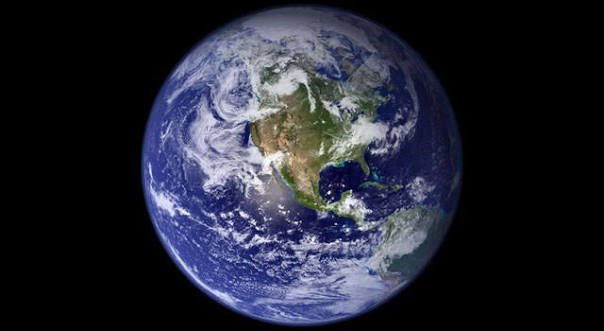
From space, Earth looks like a quiet blue sphere floating in darkness. From the ground, it is a restless world of moving plates, changing weather, deep oceans, forests, mountains and invisible forces. Every breath depends on a thin atmosphere; every river is part of a planetary water cycle. Earth is familiar because it is home, yet astonishingly complex. It formed billions of years ago, survived dramatic transformations and remains the only world known to support life. The facts below explore its position, interior, protective systems, water, seasons and future. Together, they show that our planet is not a finished stone but a dynamic, interconnected world.
1. Earth Formed About 4.5 Billion Years Ago
Earth formed when gravity gathered dust and gas in the young Solar System. Particles collided, joined together and became a larger rocky body. Heat from impacts and radioactive materials helped separate Earth into layers. Although the surface changed repeatedly, minerals preserve evidence of its ancient past. Scientists estimate Earth’s age using radiometric dating, which measures the predictable breakdown of radioactive elements in rocks and meteorites.
2. Earth Has Four Main Internal Layers
Earth is not solid all the way through. Its main layers are the crust, mantle, outer core and inner core. The crust is the thin rocky surface on which continents and oceans rest. Beneath it, the hot mantle moves slowly over geological time. The outer core is liquid iron and nickel, while the inner core is solid under immense pressure. Heat and movement inside these layers drive earthquakes, volcanoes, plate movement and Earth’s magnetic field.
3. Earth Is the Only Known Planet with Liquid Water on Its Surface
Water makes Earth unusual among the planets of our Solar System. Temperatures and atmospheric pressure allow water to remain liquid across large areas. Oceans, rivers, lakes, glaciers, groundwater and vapour form a connected cycle. Water evaporates, forms clouds, falls as precipitation and travels across or beneath land. This cycle supports ecosystems, shapes landscapes and makes life possible. Liquid water is a main reason Earth is considered habitable.
4. Oceans Cover More Than 70 Percent of Earth’s Surface
The ocean covers more than 70 percent of the planet, yet much of its depth remains difficult to explore. About 97 percent of Earth’s water is in the ocean, while only a small portion is freshwater. Oceans store heat, move energy through currents and influence clouds, rainfall and storms. They contain ecosystems from sunlit coral reefs to dark deep-sea environments. The ocean is not separate from life on land; it helps regulate conditions in which land life survives.
5. Earth’s Atmosphere Is a Thin Protective Blanket
Earth’s atmosphere is a mixture of gases held close by gravity. It contains about 78 percent nitrogen, 21 percent oxygen and small amounts of other gases, including carbon dioxide and water vapour. The atmosphere provides gases needed by organisms, distributes heat and burns up many small space rocks. Its composition is not static. Volcanoes, oceans, plants, animals and human activities continually exchange gases with it.
6. Earth’s Magnetic Field Helps Shield Life
Movement in Earth’s liquid outer core generates a global magnetic field. It extends into space and deflects much of the charged particle stream released by the Sun, called the solar wind. It also helps create auroras when energetic particles interact with gases high in the atmosphere. A compass works because its needle responds to this field. The field has changed strength and direction many times, but remains an important planetary shield.
7. Continents Move on Tectonic Plates
Earth’s outer shell is divided into tectonic plates. These plates move slowly over the softer mantle beneath them. Their movement can pull continents apart, push them together or slide them past one another. Over millions of years, it builds mountains, opens oceans and recycles crust. Plate boundaries are associated with many earthquakes and volcanoes. Continents are not permanent in their present positions; they are pieces of a moving planet.
8. Earth’s Tilt Creates the Seasons
Earth does not stand upright as it travels around the Sun. Its axis is tilted about 23.4 degrees. As Earth orbits, hemispheres lean toward or away from the Sun. The hemisphere tilted toward the Sun receives more direct sunlight and warmer conditions, while the other receives less energy. This changing angle creates the seasons. Seasons result from axial tilt, not mainly from Earth being closer to or farther from the Sun.
9. The Moon Influences Earth in Several Ways
Earth has one natural Moon, probably formed after a large collision early in the planet’s history. The Moon’s gravity produces most ocean tides, influencing coastal ecosystems and water movement. It also helps stabilise Earth’s rotational wobble, making long-term changes in orientation less extreme. The Moon affects calendars, cultures and night-time behaviour, while its phases remind us that Earth belongs to a larger gravitational system.
10. Earth Is Changing Through Natural and Human Processes
Earth has always changed through volcanic eruptions, erosion, earthquakes, ocean currents, evolution and climate shifts. Human activities now influence the planet at powerful speed and scale. Burning fossil fuels, clearing forests, pollution and land-use change affect the atmosphere, oceans and living systems. Earth will continue to exist, but conditions supporting societies and species can become less stable. Understanding these changes is essential for wiser decisions about energy, water, food and conservation.
A Living Planet
Earth is more than a planet beneath our feet. It is a layered, water-rich world connected by atmosphere, oceans, rocks, sunlight, gravity and life. Its mountains rise because plates move, its weather depends partly on the sea, and its magnetic field begins deep inside the core. Studying Earth reveals both its beauty and limits. We do not live beside nature; we live inside a planetary system. Caring for Earth means protecting conditions that make life possible for generations to come. Every stream, forest, cloud, rock and living organism participates in a planetary story that began long before humans and will continue far beyond a single lifetime. Our choices now influence its next chapter for generations ahead worldwide.