A flower can brighten a room, announce the arrival of spring or attract a tiny insect from across a garden. But beneath its colour and fragrance lies a carefully organised biological system. Flowers are not merely decorations in nature; they are the reproductive structures of flowering plants, shaped by millions of years of evolution. Some invite bees with colour and nectar, some rely on wind and some use surprising smells to attract flies and beetles. These ten facts reveal the science, variety and quiet importance of flowers in the world around us.
1. Flowers Are the Reproductive Parts of Flowering Plants
A flower is the reproductive structure of an angiosperm, the scientific name for a flowering plant. Its main job is to help the plant produce seeds and create the next generation. The stamens usually make pollen, while the pistil contains the stigma, style and ovary. After successful pollination and fertilisation, the ovules can develop into seeds. What looks delicate and decorative is therefore also a specialised part of a plant’s life cycle.
2. Pollination Moves Pollen to the Right Place
Pollination is the transfer of pollen from a flower’s anther to a stigma. It may happen within the same flower or between two flowers of the same species. Bees, butterflies, moths, beetles, birds and bats can carry pollen as they visit flowers. Wind and water also pollinate some plants. Pollination is not the same as fertilisation, but it makes fertilisation possible by bringing the male reproductive cells close to the flower’s female structures.
3. Flowers Use Colour, Shape and Scent as Signals
A flower’s appearance is often an invitation to a particular pollinator. Bright colours may be easily noticed by bees or birds, while ultraviolet patterns—visible to many insects but not to humans—can act like landing guides. Tubular flowers may suit long-tongued moths or birds, and strong night fragrance can help attract nocturnal pollinators. These features are not chosen consciously by the plant. They are adaptations that became common because they improved reproduction.
4. Not All Flowers Depend on Bees
Bees are famous pollinators, but they are only part of the story. Butterflies, moths, beetles, flies, hummingbirds, sunbirds, bats and other animals also transfer pollen. Some flowers are pollinated mainly by wind and produce large amounts of light pollen. Grasses, maize and many trees use this method. A flower’s shape, scent, timing and pollen structure can reveal which carrier it is adapted to use.
5. Flowers Can Have Male and Female Parts Together
Many flowers contain both stamens and pistils, so they have male and female reproductive parts in the same flower. Other plants produce separate male and female flowers, and some species have male and female flowers on different plants. Even flowers with both parts may reduce self-pollination by maturing the parts at different times or placing them so that pollen is less likely to reach the same flower’s stigma. These strategies encourage genetic mixing.
6. Petals Are Not Always the Most Important Part
Petals help attract pollinators, but not every flower has large, colourful petals. In some plants, structures called sepals protect the developing bud, while petals provide visual signals. Some flowers have reduced or absent petals because wind, rather than animals, carries their pollen. The familiar garden flower is only one design among many. Nature also produces tiny, greenish, hidden or highly specialised flowers that are easy to overlook.
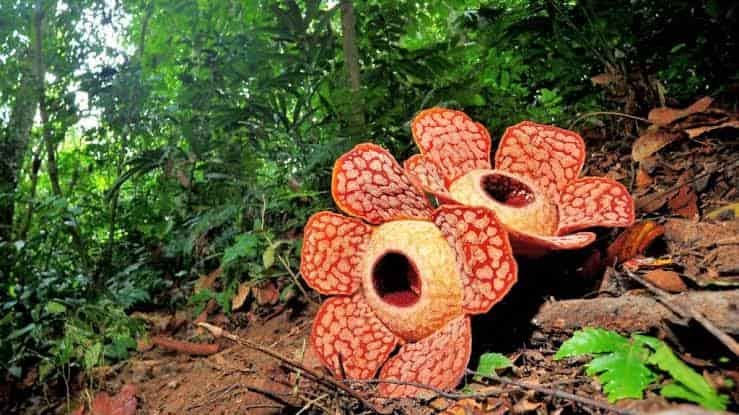
7. Some Flowers Heat Themselves or Smell Like Decay
A few unusual flowers use remarkable methods to attract pollinators. The titan arum, often called the corpse flower, produces a strong odour resembling rotting material to attract flies and beetles. Some plants can also generate heat during flowering, helping spread their scent. These adaptations may seem unpleasant to humans, but they are effective signals to insects that search for decaying matter. Beauty is not the only successful strategy in nature.
8. Fruits Often Begin as Flowers
When a flower is successfully pollinated and fertilised, its ovary may develop into a fruit that protects the seeds. This means apples, tomatoes, peas, cucumbers and many other foods begin their lives as flowers. The fruit’s colour, smell and taste can later encourage animals to eat it and carry the seeds elsewhere. In this way, flowering plants connect reproduction with the movements and feeding habits of animals.
9. Flowers Support Food Systems and Ecosystems
Pollinators help many flowering plants reproduce, including crops that provide fruits, vegetables, nuts and seeds. The U.S. Department of Agriculture notes that about three-fourths of the world’s flowering plants and roughly 35 percent of food crops depend on animal pollinators. Flowers also provide nectar and pollen for insects, birds and other wildlife. Protecting flowering plants therefore supports both natural ecosystems and human food supplies.
10. Flowers Have Evolved in Almost Every Environment
Flowering plants live in forests, grasslands, deserts, wetlands, mountains and even salty coastal habitats. Their flowers have adapted to local conditions. Desert flowers may bloom quickly after rain, water plants may float their flowers at the surface and alpine plants may stay low to resist cold winds. The enormous variety of flower shapes and schedules reflects the ability of plants to solve different survival and reproduction problems.
Flowers are among nature’s most beautiful inventions, but their importance reaches far beyond appearance. They make seeds, feed pollinators, begin the formation of fruits and help maintain ecosystems that people depend on. Their colours, scents and shapes are messages shaped by evolution, each suited to a particular environment or pollinator. The next time you see a flower, look closely. It may be small, but it represents a remarkable partnership between plants, animals and the changing world around them.