Imagine a small muscular engine working inside your chest right now – quietly, rhythmically and without asking for your attention. With every beat, it moves blood through the lungs, sends oxygen to the brain and muscles, carries nutrients to cells and helps remove waste. The human heart is an intelligent pump, an electrical machine and a self-sustaining muscle working as one system. Here are ten facts that reveal how much activity is hidden inside this fist-sized organ.
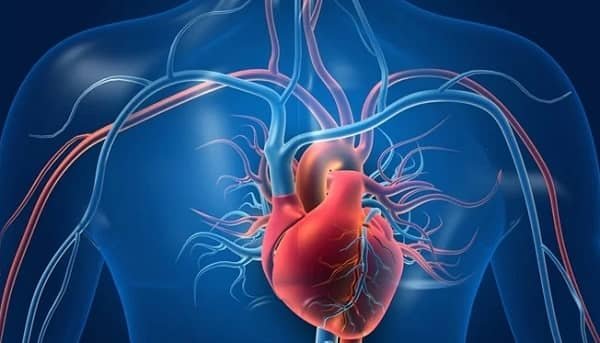
1. It is about the size of your fist, but it is much stronger than it looks
The human heart is usually about the size of a clenched fist. It is a muscular organ weighing roughly 250 to 350 grams in many adults, although size varies with body size and sex. It sits behind the breastbone, between the lungs, inside a protective sac called the pericardium. This is not simply a symbol of emotion; it is a powerful biological pump made of specialized cardiac muscle. Each contraction sends blood through arteries, veins and capillaries, delivering oxygen and nutrients while carrying away waste. A small organ does a very large job.
2. The heart is not located entirely on the left side
Many people imagine the heart sitting completely on the left side of the chest. In reality, it lies near the centre and tilts slightly left. The lower pointed end, called the apex, angles down and left, which is why a pulse is often felt more strongly there. Its position also explains why the left lung is slightly smaller than the right: it leaves room for the heart. A very small number of people are born with the heart on the right, a condition called dextrocardia.
3. It works like two pumps operating side by side
The heart is one organ, but it functions as two coordinated pumps. The right side receives oxygen-poor blood returning from the body and sends it to the lungs through the pulmonary arteries. There, blood releases carbon dioxide and collects fresh oxygen. The left side receives this oxygen-rich blood and pumps it through the aorta to the body. This arrangement keeps pulmonary and systemic circulation working in a continuous loop. It also explains an important exception: pulmonary arteries carry oxygen-poor blood, while pulmonary veins carry oxygen-rich blood.
4. Four chambers keep the circulation organised
The heart has four chambers: the right atrium, right ventricle, left atrium and left ventricle. The atria are upper receiving chambers, while the ventricles are lower pumping chambers. A muscular wall called the septum separates the two sides, preventing oxygen-rich and oxygen-poor blood from mixing in a healthy heart. The atria pass blood into the ventricles, which send it either to the lungs or to the entire body. This four-room design lets the heart handle two circulation routes at once.
5. Four valves act like one-way doors
The heart contains four valves: the tricuspid, pulmonary, mitral and aortic valves. They open and close as pressure changes, allowing blood to move forward while preventing backflow. The tricuspid valve lies between the right atrium and right ventricle; the mitral valve lies between the left atrium and left ventricle. The pulmonary and aortic valves guard the ventricular exits. The familiar ‘lub-dub’ sound of a heartbeat is mainly created by these valves closing: the first sound comes from the atrioventricular valves, and the second from the semilunar valves.
6. Its rhythm begins with its own electrical system
The heart does not wait for the brain to tell it when to beat. Specialised cells in the sinoatrial, or SA, node generate the electrical signal that normally starts each heartbeat, so the SA node is called the natural pacemaker. The signal spreads across the atria, reaches the atrioventricular, or AV, node, and travels through a conduction pathway to the ventricles. The atria contract slightly first, giving the lower chambers time to fill. This timing turns muscle contractions into an efficient pump.
7. It beats about 100,000 times a day
At rest, a healthy adult heart rate is commonly between 60 and 100 beats per minute, although age, fitness, medicines, emotions and health conditions can affect it. At an average rate, the heart may beat close to 100,000 times a day. Over 70 years, that adds up to more than 2.5 billion beats. The heart performs this work continuously, including during sleep, while its workload changes as the body’s needs change.
8. It can pump thousands of gallons of blood in one day
At rest, the heart pumps approximately five litres of blood every minute. That volume rises during activity because muscles need more oxygen and nutrients. Over a day, the total can reach about 2,000 gallons, or more than 7,500 litres. This is an average, not a fixed amount; exercise, body size, age, illness and heart rate influence cardiac output. The blood is not used up. It is continuously circulated through the heart, lungs and body.
9. The heart has its own private blood supply
The heart pumps blood to every part of the body, but it also needs its own oxygen and nutrients. Coronary arteries run across its surface and supply the cardiac muscle. The heart cannot simply absorb enough oxygen from blood passing through its chambers; the muscle needs this dedicated circulation. If plaque narrows a coronary artery, blood flow can fall. A complete blockage may cause a heart attack because part of the muscle is deprived of oxygen.
10. The left ventricle has the thickest wall
The two ventricles do not have identical jobs. The right ventricle sends blood only to the nearby lungs, so it works against relatively low pressure. The left ventricle must push blood through the entire body, so it has a much thicker muscular wall. This is a fine example of structure matching function: the chamber facing the greatest resistance has the greatest pumping muscle.
A small organ with a lifelong mission
The heart is remarkable because it combines strength, timing and endurance in a compact design. Its valves direct the flow, its electrical system sets the rhythm, its chambers divide the work and its coronary arteries keep the muscle alive. Movement, balanced food, adequate sleep and control of blood pressure, blood sugar and cholesterol help protect this system that never stops working.