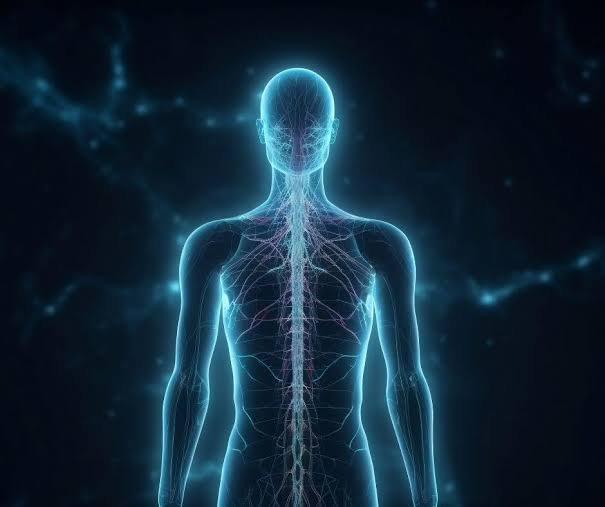
Open your eyes and an entire world appears almost instantly: colour, distance, movement, faces and tiny details. It feels effortless, yet vision is the result of a remarkable partnership between transparent tissues, delicate light-sensitive cells, fast-moving muscles, more than a million nerve fibres and the brain. Every glance begins with light entering an organ only about the size of a table-tennis ball. What follows is a chain of focusing, filtering, electrical signalling and interpretation so smooth that we rarely notice it happening. These ten facts reveal just how inventive, surprising and beautifully organised the human visual system really is.
1. You See With Your Brain as Much as Your Eyes
The eye gathers light, but it does not create the finished picture you experience. Light-sensitive cells in the retina convert light into electrical signals. Those signals travel along the optic nerve to the brain, where they are interpreted as shapes, colours, depth and motion. This is why vision can be affected by damage to the brain even when the eyes themselves are healthy. What you call “seeing” is therefore a joint achievement: the eyes collect visual information, while the brain selects, organises and gives meaning to it.
2. The Cornea Has No Blood Vessels
Most living tissues depend on blood vessels to deliver oxygen and nutrients, but a healthy cornea is different. This clear dome at the front of the eye normally has no blood vessels because vessels would interfere with its transparency. Instead, the cornea receives nourishment from tears on its outer surface, fluid inside the eye and oxygen from the air. Its clarity is essential because the cornea does much of the eye’s initial bending, or refraction, of incoming light. A transparent, correctly curved cornea helps produce a sharp image on the retina.
3. The Pupil Is an Opening, Not a Black Object
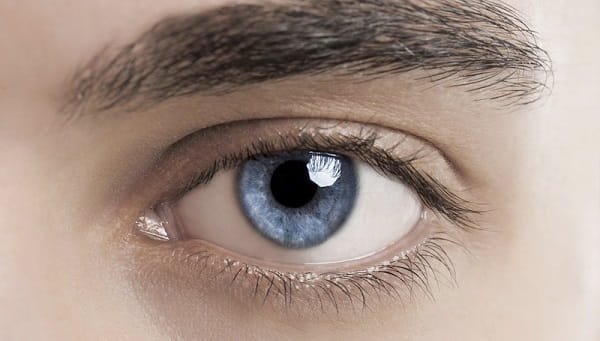
The dark circle in the middle of the eye may look like a solid black disc, but the pupil is simply an opening in the iris. It appears dark because much of the light entering it is absorbed by tissues inside the eye rather than reflected back. The coloured iris acts like an adjustable curtain. In bright surroundings, muscles make the pupil smaller to limit incoming light. In dim conditions, the pupil enlarges so more light can reach the retina. Emotions, attention and certain medicines can also influence pupil size.
4. Your Lens Changes Shape to Shift Focus
When you look from a distant building to a word on a page, the eye must quickly change its focusing power. A clear, flexible lens behind the iris helps make this possible. Tiny muscles alter the lens so light from objects at different distances can be focused on the retina. This process is called accommodation. With age, the lens gradually becomes harder and less flexible. That normal change, known as presbyopia, is why many people begin holding reading material farther away and eventually need reading glasses, commonly after their mid-forties.
5. The Retina Contains Two Main Types of Light Detectors
The retina is not a simple screen. It is living neural tissue packed with photoreceptors called rods and cones. Rods are extremely sensitive in low light and are important for night and peripheral vision, but they do not provide rich colour detail. Cones work best in brighter light and make colour vision and fine detail possible. Three main classes of cones respond most strongly to different ranges of light. The brain compares their activity to construct the colours we experience. This is one reason colours become difficult to distinguish in near darkness.
6. Your Sharpest Vision Covers Only a Small Area
The world looks detailed from edge to edge, but the eye’s highest-resolution vision comes from a tiny central area of the retina called the fovea. It is densely packed with cones and is used when you read, recognise a face or examine a small object. Details away from the centre become progressively less precise, although peripheral vision remains excellent at detecting motion and changes in the surroundings. Your eyes constantly shift the fovea from one important point to another, while the brain combines these brief samples into one apparently detailed scene.
7. Everyone Has a Natural Blind Spot
Each eye contains a small area where the optic nerve leaves the retina. This optic disc has no rods or cones, so light falling there cannot be detected. Under normal conditions, you do not notice the missing patch. The other eye often supplies overlapping information, and the visual system fills in the gap using nearby colours, lines and patterns. A simple blind-spot experiment can make a dot disappear when one eye is closed and the page is held at the correct distance. It is a striking reminder that perception is intelligently assembled rather than directly recorded.
8. Your Eyes Are Moving Even When the World Looks Still
While reading or looking around a room, the eyes make rapid jumps called saccades. These movements place objects of interest on the fovea, where vision is sharpest. The movements can happen several times within a second, yet the world does not appear to jump wildly each time your gaze changes. The brain reduces the visual disruption and combines information gathered before and after each movement into a stable experience. Other eye movements allow both eyes to follow a moving object or remain fixed on a target while the head is turning.
9. Blinking Is Part of the Eye’s Cleaning System
A blink seems like a tiny interruption, but it performs vital maintenance. Each blink spreads a thin tear film across the cornea, keeping its surface smooth, moist and optically clear. Tears also help wash away dust and contain substances that defend the eye against microbes. When people concentrate on a screen, they may blink less completely or less often, allowing the tear film to break up and causing dryness, burning or temporary blur. Blinking is therefore not merely a reflexive closing of the eyelids; it is the eye’s built-in wiper and lubrication system.
10. The Optic Nerve Carries More Than a Million Nerve Fibres
Visual information leaves each retina through the optic nerve, a thick cable made of more than one million nerve fibres. These fibres carry signals produced by retinal ganglion cells toward several areas of the brain. Some pathways contribute to conscious sight, while others help control pupil reactions, body clocks and automatic eye movements. The optic nerve is so important that damage from conditions such as glaucoma can cause permanent vision loss, sometimes before a person notices obvious symptoms. The eye may be the camera-like entrance to vision, but the optic nerve is its indispensable communication line.
The human eye is impressive not because it works alone, but because every part contributes to a larger system. The cornea and lens focus light, the retina converts it, the optic nerve carries it, and the brain turns it into a meaningful world. Even the system’s apparent weaknesses—such as a blind spot and limited sharp central vision—are handled so skilfully that they usually disappear from awareness. Every ordinary glance is, in fact, an extraordinary piece of biology in action.