Daund Junction is one of the important railway stations in Maharashtra. It serves Daund town in Pune district and works as a major railway point for passengers travelling towards Pune, Solapur, Mumbai, Ahmednagar, Manmad, Baramati, Kurduwadi, Wadi and other long-distance routes. The station is useful for daily passengers, students, workers, traders, defence travellers, pilgrims and passengers changing routes between western Maharashtra, Marathwada, north Maharashtra and south India.
Daund Junction has strong railway importance because it lies on the Mumbai–Chennai railway route and is connected with the Daund–Manmad branch line and the Daund–Baramati branch line. Public station details list Daund Junction with 5 platforms, around 14 tracks, parking, bicycle facility, electrified status and standard on-ground structure.
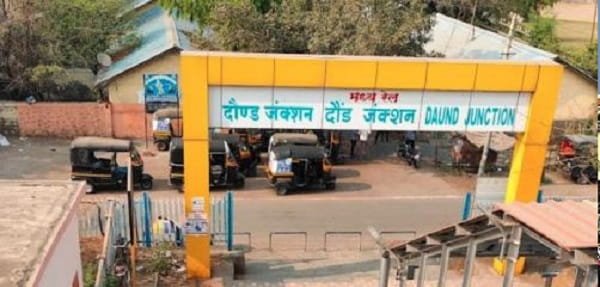
Overview of Daund Junction
| Detail | Information |
| Station Name | Daund Junction Railway Station |
| Station Code | DD |
| Town | Daund |
| District | Pune |
| State | Maharashtra |
| Address | Railway Hospital Road, New Daund, Pune district |
| Railway Zone | Central Railway |
| Railway Division | Pune Division |
| Station Type | Junction railway station |
| Main Railway Lines | Mumbai–Chennai line, Dadar–Solapur section, Daund–Manmad line, Daund–Baramati line |
| Number of Platforms | 5 platforms |
| Number of Tracks | Around 14 tracks |
| Station Structure | Standard on-ground railway station |
| Status | Functioning and electrified |
| Main Facilities | Parking, bicycle facility, ticket counters, waiting room, retiring room, refreshment stalls, book stall, platform access and announcements |
| Nearby Areas | New Daund, Daund town, Station Road area, Bhima River side, local markets and road routes towards Baramati and Ahmednagar |
Daund Junction Station Code
The station code of Daund Junction is DD. This code is used for railway ticket booking, live train running status, PNR enquiry, reservation chart checking and timetable searches. Public Pune division route details also list Daund Junction with the code DD on the Pune–Daund section.
Passengers should not confuse Daund Junction with Daund Chord Line railway station. Both are in the Daund area, but they serve different operational purposes. Daund Junction is the older and main station, while Daund Chord Line was developed on the bypass line connecting the Mumbai–Chennai line with the Daund–Manmad line.
This difference is important while booking tickets. Some trains may stop at Daund Junction, while some route-bypassing trains may use the chord line arrangement.
Location of Daund Junction
Daund Junction is located at Railway Hospital Road, New Daund, Pune district, Maharashtra. The station serves Daund town and surrounding rural and semi-urban areas. Its location is useful for passengers coming from local markets, residential areas, railway colony side, highway routes and nearby villages.
Daund town also has road connectivity through important routes. Public town details mention that National Highway 160 passes through Daund, while National Highway 65 is around 9 km north of the town. MSRTC bus services are also available from Daund towards places such as Pune, Mumbai, Ahmednagar, Shirdi, Sangli, Miraj, Beed and other destinations.
For passengers, this makes Daund Junction useful not only as a railway station but also as a regional transport point. Local autos, shared vehicles and private transport are generally available around the station area, but late-night passengers should plan onward travel carefully.
Railway Zone and Division Importance
Daund Junction is operated by Central Railway. Public railway information connects Daund Junction with the Pune railway division, especially through the Pune–Daund–Baramati section and Pune division route listings.
The station’s importance comes from its position on multiple routes. It lies on the Mumbai–Chennai line, connects towards Solapur and Wadi side, starts the Daund–Manmad line, and also connects with Baramati. This gives Daund a strong role for both passenger and freight movement.
Daund is also described as a major freight redistribution hub. This means the station has value not only for travellers but also for railway goods movement and route handling.
Platforms at Daund Junction
Daund Junction has 5 platforms and around 14 tracks. Because of this large track layout, the station handles passenger trains, express trains, long-distance services, branch-line trains and freight movement.
Platform movement can become busy during morning and evening hours, Pune-side travel, Solapur-side trains, festival rush, summer vacation, wedding season and long-distance train timings. Passengers should always check the live platform number, coach position and announcements before moving with luggage.
Platform numbers may change due to late-running trains, operational pressure, train crossing, rake movement or route adjustments. Passengers travelling with children, senior citizens or heavy luggage should reach early. At a junction like Daund, last-minute movement can create confusion because trains may arrive from different directions.
Gates and Entry Points at Daund Junction
Daund Junction does not have metro-style fixed numbered gates. For railway passengers, the practical reference is the main station building and New Daund side entry area.
The main entry side is useful for ticket counters, enquiry support, waiting space, food stalls, platform access, parking and local transport. Since Daund also handles long-distance trains and connecting passengers, the entry area can become crowded during important train arrivals and departures.
First-time passengers should enter through the main station side, check the train display board, confirm whether the train is stopping at Daund Junction or Daund Chord Line, and then move to the correct platform. This is one of the most important practical points for passengers using Daund.
Facilities at Daund Junction
Daund Junction has regular passenger facilities such as parking, bicycle facility, ticketing support, platform access, waiting room, retiring room, refreshment stalls and a book stall. Public station information also lists the station as functioning and electrified.
For daily passengers, the most useful facilities are ticket counters, platform information, announcements, drinking water, local transport and quick access to trains. For long-distance passengers, waiting space, food availability, coach position checking and platform confirmation are more important.
Passengers should keep extra time during crowded periods. Daund is not only a local town station; it also works as a junction and freight point, so movement around platforms and tracks can be more active than at smaller stations.
History and Railway Importance
Daund has old railway importance. Public railway details mention that Daund station was established in 1858 or 1859. The Pune–Raichur sector of the Mumbai–Chennai line was opened in stages, with the Pune to Barshi Road portion opened in 1859 and later extensions towards Solapur and Raichur.
The Daund–Baramati metre-gauge track was constructed in 1906. Daund became a bigger junction after the broad-gauge Daund–Manmad track was built. This history shows why Daund Junction has remained important for railway movement in Maharashtra for a long time.
Daund Chord Line Importance
Daund Chord Line has changed the way some trains operate around Daund. Earlier, certain trains coming from Pune, Goa or Hubballi side and going towards Delhi or Howrah side had to reverse direction at Daund Junction, which consumed time. To reduce this problem, Daund Chord Line station was established in 2020 on a bypass line connecting the Mumbai–Chennai line and Daund–Manmad line.
Because of this, passengers should carefully check the exact boarding station on their ticket. A train may mention Daund Junction or Daund Chord Line, and both should not be treated as the same boarding point.
Train Connectivity from Daund Junction
Daund Junction has strong train connectivity towards Pune, Solapur, Mumbai, Baramati, Ahmednagar, Manmad, Kurduwadi, Wadi and other long-distance destinations. It lies on the Mumbai–Chennai route and connects with the Daund–Manmad and Daund–Baramati lines.
The Dadar–Solapur section is part of the Mumbai–Chennai line, and the Kalyan–Pune–Daund–Wadi line is classified as a Group B route with speeds up to 130 km/h on the main line.
The Daund–Manmad section is also important for Pune–Ahmednagar–Manmad side travel. Recent reports in 2026 mentioned infrastructure work and doubling-related activity on this section, which affected some train services during work periods.
Passenger Importance of Daund Junction
Daund Junction is important for local passengers as well as long-distance travellers. Local people use it for jobs, education, business, medical visits, family travel and travel towards Pune or Solapur. Passengers from nearby villages and smaller towns also use Daund for better rail access.
The station is useful for passengers travelling between Pune and Baramati-side areas, as the Daund–Baramati branch line starts from Daund. Public route details list the Daund–Baramati section as a single-line branch with stations such as Maladgaon, Shirsai, Sirsuphal, Katphal and Baramati.
For long-distance passengers, Daund’s value is its route position. It connects mainline travel with branch-line and north Maharashtra-side movement.
Connectivity Around Daund Junction
Local connectivity around Daund Junction is practical. Autos, shared vehicles, private vehicles and local road transport are generally available near the station. Passengers can move towards Daund town, New Daund, local markets, bus routes, residential areas, Baramati road side and Ahmednagar road side.
Road connectivity is also useful because Daund is linked with state and national highway routes. Passengers going outside the town should keep extra time, especially during late hours or when travelling towards rural areas.
Nearby Places from Daund Junction
Important nearby areas include New Daund, Daund town, Station Road area, local markets, railway colony side, Bhima River side, small hotels, food shops and transport stands.
For regional passengers, Daund Junction is useful for reaching Baramati, Patas, Kurkumbh, nearby villages and road routes towards Pune, Ahmednagar and Solapur. For railway passengers, it is mainly important as a route-changing point between Pune/Solapur side, Manmad/Ahmednagar side and Baramati side.
FAQs on Daund Junction
Q: Is Daund Junction and Daund Chord Line the same station?
A: No. Daund Junction and Daund Chord Line are different railway stations in the Daund area. Daund Chord Line is on a bypass route, so passengers should check the exact boarding station printed on the ticket.
Q: Why is Daund Junction important for Pune-side passengers?
A: Daund is important for Pune-side passengers because it lies on the Pune–Daund route and connects further towards Solapur, Baramati and Manmad-side routes.
Q: Is Daund Junction useful for Baramati travel?
A: Yes. The Daund–Baramati branch line starts from Daund, making it useful for passengers travelling towards Baramati and nearby route stations.
Q: What should passengers check before boarding from Daund Junction?
A: Passengers should check whether the train stops at Daund Junction or Daund Chord Line, along with live platform number, coach position and train running status.
Q: Is Daund Junction useful for Ahmednagar and Manmad-side routes?
A: Yes. Daund is connected with the Daund–Manmad line, which is important for travel towards Ahmednagar and Manmad-side routes.
Q: Are waiting and food facilities available at Daund Junction?
A: Yes. Public station details mention waiting room, retiring room, refreshment stalls and a book stall at Daund Junction.
Q: Which nearby stations can passengers check if their train does not stop at Daund?
A: Depending on the route, passengers can check Pune Junction, Hadapsar, Kurduwadi, Solapur, Ahmednagar, Manmad, Baramati or Daund Chord Line.
Q: What is the best advice for first-time passengers at Daund Junction?
A: First-time passengers should reach early, confirm the exact station name, check platform and coach position, and avoid confusion between Daund Junction and Daund Chord Line.