Imagine a crocodile resting like a prehistoric statue, a snake moving without legs, or a tiny gecko climbing a wall as if gravity were optional. Reptiles may look quiet and ancient, but they are remarkably varied animals with specialised bodies and surprising behaviours. They live in deserts, forests, wetlands, oceans and even cities. Their scales protect them, their lungs help them breathe air and their body temperatures are closely tied to the world around them. Some reptiles ambush prey, some glide through trees, and some care for their young in ways people rarely expect. These ten facts explore the evolution, senses, survival skills and ecological importance of this fascinating group.
1. Reptiles Are Ancient Survivors
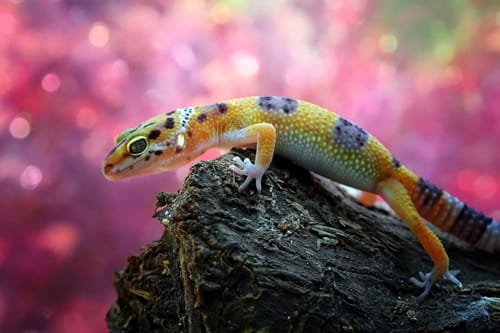
Reptiles have a long history on Earth. Their distant ancestors appeared more than 300 million years ago, long before humans and even before many modern mammals. Dinosaurs belonged to the broader reptile family, although today’s reptiles include turtles, snakes, lizards, crocodilians and tuataras. Their success comes from useful adaptations such as protective skin, air-breathing lungs and eggs that can develop away from water. Reptiles have survived dramatic changes in climate and geography, making them living reminders of an ancient chapter in Earth’s history.
2. Their Scales Are More Than Decoration
Most reptiles have skin covered with scales or scutes made mainly from keratin, the same tough protein found in human fingernails. This outer layer reduces water loss, protects the body from scratches and helps shield reptiles from heat, cold and parasites. Snake scales also help create friction against the ground, allowing the animal to push forward. Crocodile scutes may contain bony plates beneath the skin and provide protection. Because reptile skin does not grow continuously like ours, many species shed an old outer layer as they grow.
3. Reptiles Depend on External Heat
Reptiles are ectothermic, which means they rely largely on external sources of heat to warm their bodies. A lizard may bask in sunlight in the morning, move into shade at midday and hide under a rock when temperatures fall. This strategy uses less food energy than maintaining a constant internal temperature, but it also means reptiles are strongly affected by weather. Temperature influences their movement, digestion, immune function and breeding. Calling them “cold-blooded” can be misleading: reptiles are not always cold, and they actively choose places that help keep their bodies within a useful temperature range.
4. Snakes Move Without Legs
Snakes have no legs, yet they can travel across sand, soil, water, rocks and tree branches. Their long backbone and many ribs support powerful muscles connected to hundreds of flexible vertebrae. Different species use different movements, including sidewinding, concertina movement and the familiar winding motion called lateral undulation. Their broad belly scales grip the ground while muscles push against small irregularities. Some snakes can even climb smooth-looking surfaces by using tiny imperfections. Their unusual movement is a superb example of engineering through anatomy rather than limbs.
5. Many Reptiles Have Remarkable Senses
Reptile senses vary greatly between groups. Snakes use their forked tongues to collect chemical particles and deliver them to the Jacobson’s organ in the roof of the mouth. This helps them follow scent trails and locate prey. Pit vipers, some pythons and some boas can detect heat from warm-bodied animals through specialised facial pits. Crocodilians have sensitive pressure receptors around the mouth that can notice movements in water. Some lizards have excellent vision, while others rely more on smell, vibration or touch. Their world is not silent or dull; it is filled with signals humans often cannot detect.
6. Reptile Eggs Are Built for Life on Land
Many reptiles lay eggs with leathery or firm shells that protect the developing embryo and reduce water loss. Unlike amphibian eggs, reptile eggs do not usually need to remain submerged. This allowed ancient reptiles to move farther from ponds and rivers and occupy dry habitats. Some snakes and lizards give birth to live young, while others retain eggs inside the body until they hatch. In several reptiles, incubation temperature can influence the sex of the offspring. This makes changing nest temperatures an important concern as climates become warmer.
7. Some Reptiles Care for Their Young
Reptiles are often described as animals that abandon their offspring, but this is not true for every species. Crocodile mothers guard nests, help hatchlings reach water and may protect them for months. Some pythons coil around eggs and shiver their muscles to produce heat. Certain lizards defend nesting areas or remain near young. Parental care takes time and energy, so it has evolved where the protection it offers improves survival. These behaviours show that reptile family life can be more complex than their quiet appearance suggests.
8. Turtles Carry Their Homes but Are Not Invincible
A turtle’s shell is part of its skeleton. The upper carapace and lower plastron are connected to the ribs and vertebrae, so a turtle cannot simply leave its shell. Shells provide protection, but they do not make turtles indestructible. Roads, fishing nets, plastic pollution, habitat loss and illegal trade threaten many species. Sea turtles travel thousands of kilometres between feeding and nesting areas, using Earth’s magnetic signals and other environmental clues. Some young turtles emerge from nests at night and move toward the brightest open horizon, which is usually the sea.
9. Crocodilians Are Powerful but Careful Hunters
Crocodiles and alligators have strong jaws, muscular tails and eyes and nostrils positioned high on the head. This allows them to wait almost completely submerged while watching for prey. Their bite is extremely powerful, but opening the jaws is controlled by a different set of muscles and can be surprisingly easier to restrain. Crocodilians also swallow stones, which may help with digestion or body balance. Despite their fearsome reputation, they often spend long periods conserving energy and choose ambushes rather than exhausting chases.
10. Reptiles Keep Ecosystems in Balance
Reptiles are predators, prey, seed dispersers and indicators of environmental health. Snakes help control rodents, lizards eat insects, turtles transport nutrients between habitats and some fruit-eating reptiles spread seeds. Crocodilians create pools that can provide refuge for other animals during dry periods. When reptile populations decline, the effects can spread through food webs. They face habitat destruction, illegal collection, road deaths, pollution, invasive species and climate change. Protecting wetlands, forests, grasslands and nesting sites helps reptiles while also preserving the wider ecosystems on which people depend.
Reptiles are not lifeless creatures from a forgotten age. They are adaptable animals with sensitive bodies, specialised senses and important roles in nature. A snake’s scales, a turtle’s shell, a crocodile’s ambush and a lizard’s basking behaviour all reveal solutions shaped by evolution. Understanding reptiles can replace fear with curiosity and encourage better protection of their habitats. When these ancient survivors remain healthy, they help keep ecosystems stable—and remind us that the natural world is richer than it first appears.