Imagine a narrow strip of land where coconut palms lean towards the Arabian Sea, boats move quietly through green waterways and mist-covered mountains rise behind fields, villages and towns. This is Kerala, a state whose landscape seems to contain several worlds at once. Its backwaters are famous, but Kerala is much more than a scenic destination. The state is also shaped by the biodiversity of the Western Ghats, centuries of Indian Ocean trade, distinctive performing arts, community festivals and a long tradition of public education and healthcare. Kerala’s history includes ancient ports, Jewish and Arab trading connections, European colonial encounters and the formation of a modern Malayalam-speaking state in 1956. From the high ranges of Anamudi to the coastal fishing villages of Alappuzha and Malabar, these ten facts explore the natural beauty, cultural depth, social achievements and living traditions that make Kerala one of India’s most distinctive states.
1. Kerala Was Formed on 1 November 1956
The modern state of Kerala came into existence on 1 November 1956, when areas with a Malayalam-speaking majority were brought together during the reorganisation of Indian states. The new state combined the former regions of Travancore, Cochin and Malabar, along with the Kasaragod area. Thiruvananthapuram became the capital, while Kochi developed as an important commercial and administrative centre. Kerala is a relatively narrow state, squeezed between the Arabian Sea in the west and the Western Ghats in the east. This shape has influenced its climate, settlement pattern, agriculture and transport. Unlike regions dominated by one large inland plain, Kerala’s identity is tied to the close relationship between coast, rivers, hills, forests and densely populated villages.
2. Kerala’s Landscape Runs from the Sea to High Mountain Ranges
Kerala contains coastal plains, lagoons, midland hills, plantations and high mountain ecosystems within a comparatively small area. The state’s highest peak is Anamudi, rising to about 2,694 metres in the Western Ghats. The mountains intercept moisture-laden monsoon winds, helping give Kerala its lush vegetation and heavy seasonal rainfall. Tea, coffee, cardamom, pepper and other crops grow in the cooler highlands, while coconut, rice, banana and spices are important in lower regions. This sharp change in elevation creates different local climates and habitats. A journey across the state can move from humid coastal air to cool mountain mist in a matter of hours, making Kerala’s geography unusually varied for its size.
3. The Western Ghats Make Kerala a Biodiversity Treasure
A large part of Kerala’s ecological importance comes from the Western Ghats, an ancient mountain chain recognised by UNESCO as a global centre of biological diversity and endemism. The forests of the Ghats influence the Indian monsoon and support many species found nowhere else. Kerala’s protected landscapes include places such as Silent Valley, Eravikulam, Periyar, Chinnar and parts of the Nilgiri and Agasthyamalai regions. Elephants, tigers, leopards, gaur, Nilgiri tahr, lion-tailed macaques, hornbills and countless reptiles, amphibians and insects live in these habitats. The region is not simply a collection of scenic hills. Its forests regulate water, protect soil, store carbon and support communities whose livelihoods are connected with agriculture and forest resources.
4. Kerala Is Famous for Its Backwaters and Inland Waterways
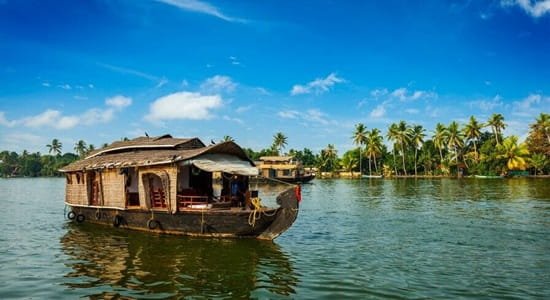
Kerala’s backwaters are a connected system of lakes, lagoons, canals, rivers and flooded lowlands that run parallel to parts of the coast. Vembanad is the largest lake in the state and one of the most important water bodies in the backwater network. These waterways have traditionally supported fishing, rice cultivation, transport and trade. Houses and villages developed along the water, and boats became a natural part of daily life. The famous houseboat experience is a modern way of seeing this landscape, but the backwaters are not merely a tourist attraction. They are working ecosystems that face pressure from pollution, construction, changing water flow and climate-related risks. Protecting them requires balancing local livelihoods, transport, farming, conservation and tourism.
5. Kerala Has a Long History of Indian Ocean Trade
Kerala’s position on the Arabian Sea made it an important participant in Indian Ocean commerce for centuries. The Malabar Coast was especially known for black pepper and other spices, which attracted merchants from Arabia, Persia, East Africa, China and parts of Europe. Ancient and medieval ports connected local producers with distant markets, and the arrival of foreign traders left visible marks on the state’s food, architecture, languages and religious communities. Kerala became home to long-established Hindu, Muslim, Christian and Jewish communities, each contributing to the region’s social and cultural history. European powers later competed for control of the spice trade, but Kerala’s maritime story began long before colonial rule and continues today through ports, fishing and international migration.
6. Kathakali Turns Performance into a Visual Language
Kathakali is one of Kerala’s best-known classical performance traditions. It combines dance, theatre, music, elaborate costumes, painted faces and carefully controlled gestures to present stories drawn mainly from Indian epics and traditional narratives. The colours and patterns of the face makeup help identify the character’s nature or role. Performers communicate through hand movements, eye expressions and body positions, often without ordinary spoken dialogue. Training requires discipline because the actor must control facial muscles, eye movements, rhythm and posture. Kathakali is not simply a colourful stage show; it is a highly developed dramatic language. Its distinctive style has also influenced modern theatre, dance education and international interest in Indian performance traditions.
7. Kerala Is Home to UNESCO-Recognised Performing Arts
Kerala’s cultural heritage includes several performance traditions that combine ritual, storytelling, music and community participation. Kutiyattam, an ancient Sanskrit theatre tradition practised in Kerala, is recognised by UNESCO as one of India’s oldest living theatrical traditions. Its performances use detailed eye movements, hand gestures and facial expression, and artists traditionally undergo many years of training. Mudiyettu, a ritual theatre and dance drama of central Kerala, presents the battle between the goddess Bhadrakali and the demon Darika in temple and village settings. These traditions show that Kerala’s cultural heritage is not limited to museums or monuments. It continues through rehearsals, festivals, family knowledge, temple practices, teachers and performers who pass complex skills from one generation to the next.
8. Kerala’s Literacy and Social Development Are Widely Noted
Kerala is widely recognised for its high literacy rate and strong emphasis on public education. According to the 2011 Census, the state’s literacy rate was about 94 percent, with female literacy also reaching a high level. This achievement developed through long-term efforts by governments, local communities, social reformers, missionaries and public organisations. Education helped widen access to newspapers, civic participation and social debate, while improvements in public health supported longer lives and better living conditions. Kerala still faces challenges such as unemployment, ageing, lifestyle diseases and unequal opportunities between communities, so high literacy does not mean every problem has disappeared. Its experience nevertheless shows how investment in schooling and healthcare can influence society far beyond examination results.
9. Onam Is a Harvest Festival Shared Across Kerala
Onam is Kerala’s best-known festival and is celebrated with flower decorations, traditional meals, games, boat races, music and family gatherings. It is associated with the legend of King Mahabali, whose annual return is welcomed by the people. The festival also reflects the agricultural calendar and the importance of the harvest season. The elaborate vegetarian feast, called sadya, is served with several dishes and is traditionally eaten on a banana leaf. Pookalam designs made with flowers decorate courtyards and public spaces. Vallam kali, or traditional boat racing, brings teams together in long, narrow boats that move to the rhythm of songs and coordinated strokes. Onam is celebrated across religious and social communities, giving it a broad cultural place in Kerala’s public life.
10. Kerala Has Deep Connections with Ayurveda and Plant Knowledge
Kerala is internationally associated with Ayurveda, a traditional Indian system of medicine that uses ideas about balance, diet, lifestyle, herbs and therapeutic treatments. The state’s warm climate, forests and long history of medicinal plant knowledge helped Ayurveda develop a strong presence in Kerala. Traditional practitioners worked with plants, oils and preparations, while knowledge was often passed through families and specialised schools. Kerala is also home to many plants used in local food, farming and household remedies. Traditional medicine should not be treated as a replacement for modern diagnosis or emergency care, but its history remains an important part of Kerala’s cultural identity. The state’s experience also underlines the need to conserve forests and document plant knowledge responsibly.
A Green State with a Deep Cultural Memory
Kerala’s appeal comes from the way its natural and human histories remain closely connected. The sea encouraged trade, the mountains shaped the monsoon, the rivers created backwaters, and the forests sheltered species found nowhere else. At the same time, communities developed music, theatre, festivals, food traditions and systems of learning that continue to evolve. Kerala is often remembered for coconut trees and houseboats, but its deeper story includes ancient commerce, ecological responsibility, public education, social reform and living artistic traditions. The state is not a single postcard image. It is a layered landscape where water, mountains, memory and everyday life meet—and that combination is what makes Kerala one of the most remarkable regions of India.