A butterfly begins life looking nothing like the delicate creature it will become. It starts as a tiny egg, hatches into a leaf-eating caterpillar, disappears inside a chrysalis and finally emerges with patterned wings. This transformation is one of nature’s most beautiful surprises, but it is only the beginning of the butterfly story. Butterflies navigate using sunlight, taste with their feet, drink through a curled proboscis and sometimes travel across entire countries. Their colours can attract mates, confuse predators or warn that they are poisonous. These ten facts reveal the hidden science, remarkable behaviour and ecological importance behind one of the world’s most admired insects.
1. Butterflies Undergo Complete Metamorphosis
Butterflies pass through four distinct life stages: egg, larva, pupa and adult. The larva is the caterpillar, whose main job is to eat and grow. It sheds its skin several times because its soft body quickly becomes too large for the old covering. Inside the chrysalis, the caterpillar’s body is reorganised into an adult with wings, long legs, antennae and reproductive organs. This is not simply a small insect growing larger; it is a dramatic change in body design. The adult and caterpillar often eat different foods and live in different ways.
2. Caterpillars and Adults Need Different Plants
A female butterfly does not lay eggs randomly. She often searches for a particular host plant that her caterpillars can eat after hatching. Monarch caterpillars, for example, depend on milkweed. Adult butterflies usually drink nectar from flowers, while caterpillars chew leaves and need nutrients for rapid growth. This difference explains why planting only colourful flowers may not be enough to support butterflies. A healthy butterfly garden needs both nectar plants for adults and suitable host plants for young caterpillars.
3. Butterfly Wings Are Covered with Tiny Scales
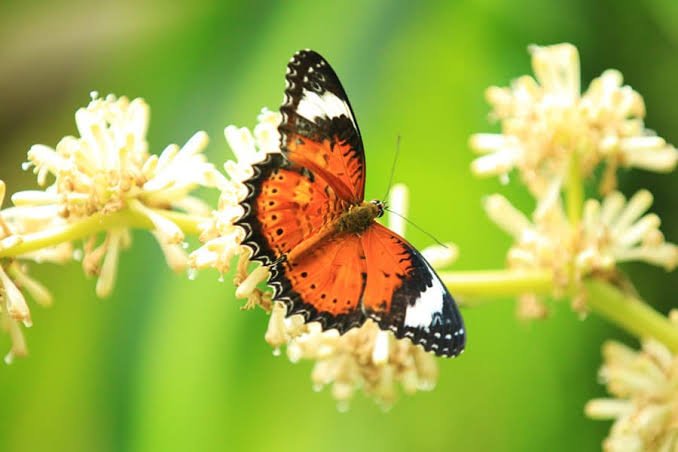
Butterfly wings are not smooth sheets of colour. They are covered with thousands of microscopic scales arranged like roof tiles. These scales contain pigments or special structures that absorb, reflect or scatter light. The patterns may help butterflies recognise their own species, attract mates or frighten predators. Scales can rub off when a butterfly is handled, but losing some does not usually destroy the wing. The wing itself is a thin membrane supported by veins that carry nutrients during development and help strengthen its surface.
4. Colour Can Be a Shield or a Warning
Bright butterfly colours have many meanings. Some species use camouflage to blend with leaves, bark or dry ground. Others display bold spots that make them look larger or startle an attacking bird. Warning colours may advertise that the butterfly tastes unpleasant because it has stored chemicals from its larval food. Harmless species sometimes resemble distasteful species, a strategy called mimicry. Even the underside of a wing may be patterned differently from the upper side, allowing a butterfly to hide while resting and reveal a striking display during flight.
5. Butterflies Taste with Their Feet
Butterflies have taste receptors on their feet. When a female lands on a plant, she can detect chemical clues that help her decide whether it is a safe place to lay eggs. This ability is vital because a caterpillar cannot travel far to find the correct food after hatching. Butterflies also use antennae to sense smells and air movement. Their long proboscis works like a drinking straw, uncoiling to reach nectar and curling up again when not in use. Different flowers suit different proboscis lengths.
6. Some Butterflies Migrate Great Distances
Many butterflies move seasonally to find warmth, food or breeding sites. The monarch is famous for its multi-generational migration between Mexico and areas as far north as Canada. No single monarch completes the entire round trip; different generations continue the journey. Other species migrate across mountains, deserts or coastlines. Butterflies use the position of the Sun, landscape features, wind and possibly Earth’s magnetic field to orient themselves. Their small size makes these journeys especially impressive, because weather can quickly affect their energy and survival.
7. Butterflies Help Pollinate Plants
When butterflies visit flowers for nectar, pollen may stick to their bodies and be carried to another flower. They are not as efficient as bees for every crop, because their bodies are less hairy, but they still contribute to pollination in many habitats. Pollination allows plants to produce seeds and fruit. Butterflies also connect different parts of the food web: caterpillars feed birds and other animals, while adult butterflies provide food for spiders, lizards and insects. A garden rich in butterflies is often a sign of plant diversity.
8. They Warm Their Bodies Before Flying
Butterflies cannot generate enough internal heat to fly effectively like mammals and birds do. They often bask in sunlight with their wings open, absorbing warmth before becoming active. Darker wings may warm quickly, while some species adjust their body position to capture more sunlight. On cool or cloudy days, butterflies may remain still for long periods. They also need to avoid overheating, so shade, wind and the time of day influence where they rest. Their daily routine is closely tied to temperature.
9. Their Lives Can Be Surprisingly Short
Many adult butterflies live only a few weeks, although some species survive for several months or pass the winter in a dormant stage. A short adult life does not mean an unimportant one. The adult’s urgent tasks are finding food, avoiding predators, mating and laying eggs. The caterpillar stage may last longer and is focused mainly on growth. Lifespan varies with species, weather, predators and habitat. A butterfly’s life is brief, but several generations can appear in a single year.
10. Butterflies Need Protection from Environmental Change
Butterflies depend on connected habitats containing host plants, nectar, shelter and safe places to overwinter. Habitat loss, pesticides, pollution, invasive plants, extreme weather and climate change can reduce their numbers. Warmer temperatures may cause plants to flower earlier than butterflies emerge, creating a timing problem. People can help by planting native flowers, avoiding unnecessary pesticides, leaving some leaves and stems for insects, and protecting milkweed and other host plants. Conservation is not only about saving a beautiful insect; it also supports healthy ecosystems and many other pollinators.
Butterflies are living examples of patience, transformation and adaptation. Their wings are built from tiny scales, their feet can test a plant, and their journeys may cross hundreds or thousands of kilometres. Although their adult lives are often short, butterflies influence flowers, feed other animals and reveal changes in the environment. A garden with native plants and fewer chemicals can become a small refuge for them. When we protect butterflies, we protect the intricate web of plants, insects and seasons that makes the natural world work.