Imagine a country where snow-fed mountains rise above the world’s highest plateau, monsoon clouds transform the landscape, ancient cities still reveal clever engineering, and a phone can move money in seconds. India is not one single story told in ten chapters; it is a huge conversation between languages, landscapes, faiths, cuisines, memories and ambitions. Its history reaches deep into the Bronze Age. The most interesting facts about India are therefore not just records. They show how an old civilisation and a young, fast-changing society continue to influence one another. Here are ten well-researched facts that make India especially fascinating.
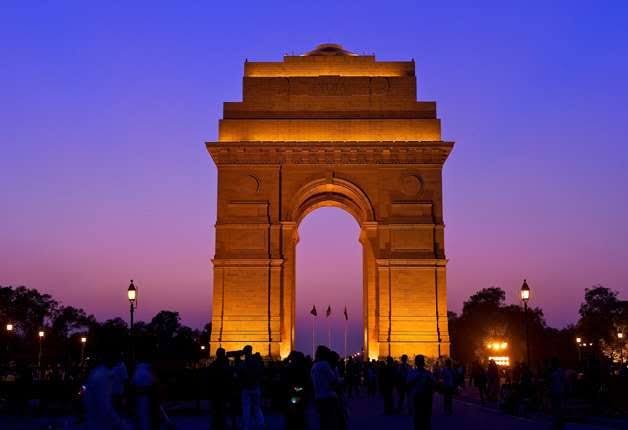
1. India Is a Union of 28 States and 8 Union Territories
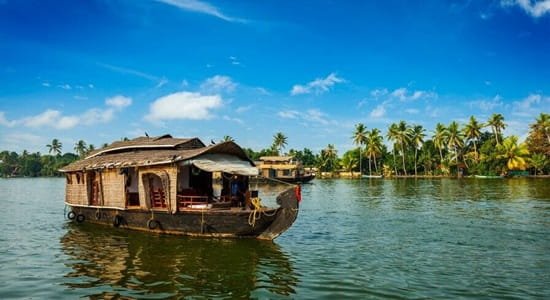
India’s political map is remarkably varied. The country has 28 states and 8 Union Territories, with different geographies and traditions. States have elected governments, while Union Territories are administered under the Union framework, with different arrangements in some territories. This structure helps explain why India can feel like many countries within one constitutional union: Kerala, Rajasthan, Assam, Goa and Ladakh are not merely different destinations but distinct social and environmental worlds.
2. India Is the World’s Most Populous Country
United Nations estimates placed India ahead of China in 2023, making it the world’s most populous country. India contains an extraordinary range of ages, occupations, ambitions and living conditions. A crowded metropolitan railway, a Himalayan village and a farming community in the Deccan are all part of the same national story. The country’s demographic future will depend increasingly on education, health, employment and opportunities for its large working-age population.
3. The Constitution Recognises 22 Scheduled Languages
India’s linguistic richness is often simplified by the phrase “many languages.” The Eighth Schedule of the Constitution lists 22, including Assamese, Bengali, Gujarati, Hindi, Kannada, Malayalam, Marathi, Odia, Punjabi, Sanskrit, Tamil, Telugu and Urdu. These languages belong to different families and carry their own literatures, oral traditions and regional identities. India’s language story is not a single ladder; it is a living network.
4. Dholavira Shows That Ancient India Had Sophisticated Urban Planning
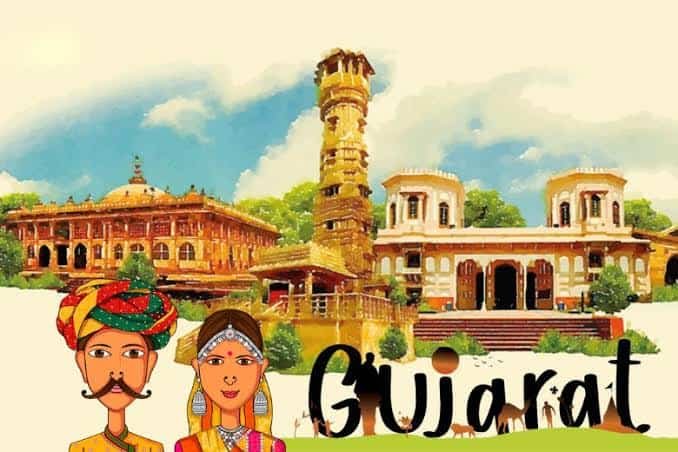
On the island of Khadir in Gujarat stands Dholavira, a Harappan site from the third to the mid-second millennium BCE. UNESCO describes its planned streets, fortifications, reservoirs, drainage system and use of stone as evidence of advanced urban organisation. Its most remarkable lesson is water management. In a demanding environment with seasonal streams, residents designed systems to collect and conserve scarce water. Dholavira turns history into a practical lesson in planning for climate and limited resources.
5. India Is One of the World’s Megadiverse Countries
India’s biodiversity is as impressive as its cultural variety. Government environmental reports identify four of the world’s biodiversity hotspots in the country: the Himalaya, Indo-Burma, the Western Ghats–Sri Lanka region and Sundaland, represented in India by the Nicobar Islands. These areas contain many unique species. From alpine ecosystems and rainforests to mangroves, deserts and coral-rich islands, India’s wildlife is shaped by dramatic differences in altitude, rainfall and coastline.
6. Yoga Travelled from an Indian Tradition to a Global Observance
Yoga has deep roots in Indian philosophical and spiritual traditions, but its modern global reach is extraordinary. The United Nations designated 21 June as the International Day of Yoga after a proposal from India; the initiative received broad support from member states. Yoga is now practised in studios, schools, hospitals and homes around the world. Its journey shows how an idea can cross borders while carrying the cultural memory of its origin.
7. India’s Heritage Includes Ancient Cities, Temples and Living Landscapes
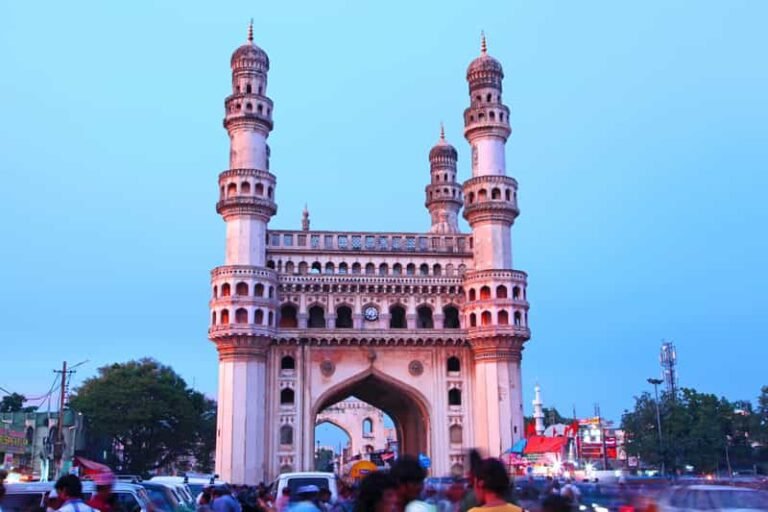
India’s heritage cannot be reduced to one famous monument. UNESCO’s World Heritage records include Dholavira, historic cities such as Ahmedabad and Jaipur, sacred places, cave complexes, national parks and the Mountain Railways of India. Heritage also includes architecture, engineering, ecology, spiritual practice and the relationship between people and place. India’s past survives in stone, forests, rail tracks, festivals, craft traditions and living communities.
8. Chandrayaan-3 Made India the First Country to Land near the Moon’s Southern Polar Region
On 23 August 2023, India’s Chandrayaan-3 mission achieved a safe and soft landing near the Moon’s southern polar region. ISRO says the mission demonstrated landing, rover movement and scientific experiments. The Vikram lander and Pragyan rover studied the area with instruments designed to examine temperature, seismic activity, plasma and surface composition. It was a carefully engineered demonstration of India’s growing ability to conduct planetary science.
9. India Built a Digital Payment System Used at Extraordinary Scale
The Unified Payments Interface, or UPI, lets people connect participating bank accounts through an app and make instant payments using mobile numbers, virtual addresses or QR codes. NPCI’s statistics recorded more than 23.6 billion UPI transactions in July 2026 across 741 live banks. That monthly figure illustrates how digital infrastructure has become part of ordinary economic life for millions of people.
10. India’s Identity Is Made from Constant Variety
Perhaps the most important fact is that India’s diversity is not a decorative side note; it is the country’s defining condition. A national identity is continually negotiated through regional food, clothing, music, religion, language, cinema, festivals and political debate. India’s strength is not that everyone is the same. It is that many different histories continue to share one civic space and influence one another.
A Country That Keeps Unfolding
India is fascinating because it refuses to stay inside one category. It is ancient and experimental, spiritually influential and technologically ambitious, ecologically rich and intensely urban. Its best facts are connected: water wisdom can echo in modern planning, linguistic diversity can shape literature, and scientific ambition can grow from a long tradition of observation. To learn about India is not simply to collect trivia; it is to watch a vast, varied society continually renew itself while carrying its past forward. Across its regions, the same country can offer a different answer to what progress, community, beauty or belonging means. That variety encourages curiosity: every journey across India can feel like moving through a new landscape, a new archive and a new way of imagining the future for everyone.