Walk through a forest, look beneath a stone, watch a dog study a human face or listen to whales calling through the ocean, and one truth becomes clear: animals are not background characters in nature. They are living problem-solvers with specialised bodies, senses, memories, social rules and survival strategies. A bat finds its way in darkness, an octopus changes its appearance, an elephant remembers distant water sources, and a tiny insect influences an ecosystem. Animals fly, swim, burrow, cooperate and survive alone. Every species carries an answer to obtaining energy, avoiding danger, reproducing and living in a changing world. These facts reveal the science and wonder behind animal life.
1. Animals Live in Almost Every Environment
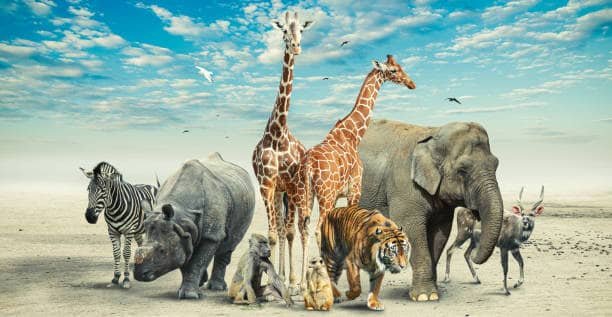
Animals have adapted to deserts, rainforests, polar regions, deep oceans, mountains, underground tunnels and cities. Their bodies change according to their surroundings. Camels conserve water and tolerate extreme heat, while polar animals use insulation and special circulation systems to reduce heat loss. Deep-sea creatures may live without sunlight, depending on organic matter or chemical energy. This range shows that animal life is not tied to one landscape; it can develop wherever energy and shelter are available.
2. Camouflage Helps Animals Hide or Hunt
Camouflage is a survival strategy that makes an animal harder to see or track. A snowshoe hare changes its coat colour with the seasons, while a stick insect resembles a twig and a leopard’s spots break up its outline among shadows. Camouflage protects prey, but predators also use it to approach unnoticed. Some animals change colour quickly, while others are born suited to one habitat. Perfect invisibility is unnecessary; even a confusing outline can provide time to escape or attack.
3. Animals Use Extraordinary Senses
Humans depend on sight and hearing, but many animals experience the world through senses we do not possess. Bats and dolphins use echolocation, sending sounds and interpreting echoes. Snakes detect heat from warm-bodied prey, while sharks sense electrical signals produced by other animals. Many insects detect ultraviolet patterns on flowers. These are specialised biological systems shaped by evolution to solve problems in feeding, navigation, communication and defence.
4. Animal Communication Is Rich and Varied
Animals communicate through sounds, scents, colours, movements, touch and vibrations. Wolves use calls and body language, bees perform dances that indicate food direction, and elephants use low-frequency sounds that travel long distances. Some mammals leave scent marks to announce territory, while frogs call to attract mates. Communication warns about danger, strengthens family bonds and coordinates action. Human language is unique in complexity, but communication is widespread throughout the animal kingdom.
5. Some Animals Are Excellent Problem-Solvers
Intelligence does not look the same in every species. Crows use tools, chimpanzees learn by observation, elephants remember individuals and routes, and octopuses explore containers and escape through small openings. Social animals need intelligence to manage relationships, cooperate and respond to rivals. Others solve physical problems such as finding hidden food or building shelters. Intelligence is not measured only by similarity to humans; it is the capacity to learn and respond to challenges.
6. Animal Bodies Are Built for Specific Jobs
Every animal body is a collection of specialised solutions. A cheetah’s flexible spine and long legs support speed, a woodpecker’s skull absorbs repeated impacts, and a giraffe’s cardiovascular system manages blood flow to its tall head. Webbed feet help ducks swim, while a mole’s forelimbs help it tunnel. Shape, muscle, skin, teeth, claws, shells and organs work together to help a species obtain food, move efficiently and survive.
7. Cooperation Helps Animals Survive
Many animals survive by cooperating. Meerkats watch for predators, wolves coordinate hunts, ants build colonies with specialised roles and dolphins may assist an injured group member. Cooperation provides protection, shared childcare, better access to food and improved learning. It also requires social rules. Animals recognise relatives, remember alliances and respond to unfair behaviour. Group life brings competition, but these relationships create complex societies outside the human world.
8. Some Animals Enter Remarkable Survival States
When conditions become dangerous, animals may slow their bodies or change behaviour. Bears reduce activity during winter, some frogs tolerate partial freezing, and desert animals remain inactive until rain returns. Certain microscopic animals survive extreme drying and become active when water is available. These strategies conserve energy when food, warmth or moisture are limited. Hibernation and dormancy involve controlled changes in metabolism, temperature, breathing and heart rate.
9. Animals Shape Entire Ecosystems
Animals are not only residents of ecosystems; they help maintain them. Beavers create wetlands, earthworms improve soil, pollinating insects support flowering plants, and large predators influence where herbivores feed. Fruit-eating animals spread seeds, while scavengers remove remains and recycle nutrients. Removing one important species can affect many others. Conservation is therefore not only about protecting animals; it is about preserving relationships that allow forests, grasslands, rivers and oceans to function.
10. Many Animals Face Growing Human Pressures
Animals face habitat destruction, pollution, climate change, illegal hunting, invasive species, disease and conflict with people. Some species adjust, but adaptation cannot happen quickly enough when environments change rapidly. Protection requires connected habitats, responsible farming, cleaner water, reduced waste, wildlife laws and informed communities. Small actions matter: avoiding disturbance, keeping pets from hunting wildlife, planting native species and refusing products linked to illegal trade. The future of animals depends on human choices.
Life in All Its Forms
Animals teach us that life can be inventive. A body may become a wing, shell, fin, trunk or camouflage pattern; a sound may become a warning, greeting or map to food. The more we study animals, the more clearly we see nature’s relationships and adaptations. Respecting animals means protecting creatures, habitats and connections that sustain them. Their survival and ours are closely linked. Every species is part of a larger web. When one animal disappears, its predators, prey, plants and habitats may also change. Learning about animals encourages humility because many abilities we once considered uniquely human appear in different forms elsewhere. Their stories enlarge our understanding of intelligence, resilience, cooperation and the meaning of life itself.