Before humans built aircraft, birds were already crossing oceans, climbing mountains and using wind as a highway. A hummingbird can hover beside a flower, an albatross can travel enormous distances over the sea, and a crow can solve problems that surprise researchers. Birds are engineers, navigators, singers and survivors. Here are ten carefully selected facts showing why birds are among Earth’s most remarkable animals.
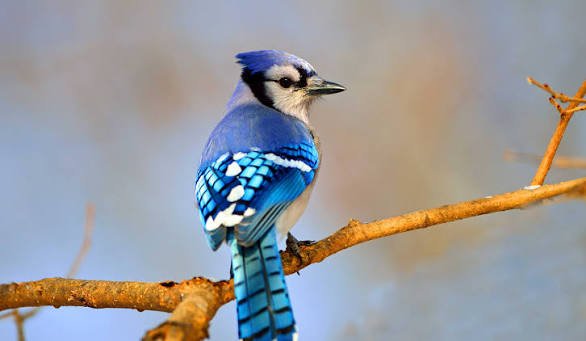
1. Birds Are the Only Living Dinosaurs
It may sound surprising, but modern birds are the only surviving members of the dinosaur lineage. Scientists place them within the theropod group, the same broad branch that included famous meat-eating dinosaurs. Fossils show that some dinosaurs had feathers long before modern birds appeared. Over millions of years, bird ancestors developed lighter bodies, specialised bones, powerful muscles and wings. So when a sparrow lands on a balcony, it is not merely a small animal; it is a living continuation of one of Earth’s most ancient evolutionary stories.
2. Feathers Do Much More Than Help Birds Fly
Feathers are one of the defining features of birds, but flight is only one of their jobs. They help insulate the body, repel water, protect delicate skin and create patterns used in courtship or camouflage. Some feathers are soft and downy, trapping warm air close to the body. Others are strong and arranged to shape the wing and tail. Birds replace worn feathers through moulting, a natural process that can happen gradually or in a concentrated period, depending on the species.
3. Not Every Bird Can Fly
Wings do not automatically mean flight. Ostriches, emus, cassowaries, kiwis and penguins are birds with wings that have evolved for other purposes. The ostrich uses its long legs for extraordinary running speed, while penguins use their wing-like flippers to move efficiently underwater. On islands, where predators may be scarce, some birds evolved away from flight because maintaining large flight muscles was no longer essential. Their lives show that evolution does not follow one fixed design; it reshapes bodies for different environments.
4. Hummingbirds Can Fly Backward
Hummingbirds are among the most agile flying animals. Their wings rotate in a way that creates lift during both the forward and backward parts of a stroke, allowing them to hover and even fly backward. The ruby-throated hummingbird can beat its wings around 50 times per second while hovering. These tiny birds also have extremely high energy demands, feeding on flower nectar and small insects. Their glittering flight is beautiful, but it is also a remarkable example of specialised biomechanics.
5. Many Birds Migrate Across Huge Distances
Migration is one of nature’s greatest journeys. Birds may travel thousands of kilometres between breeding and wintering grounds, often crossing deserts, mountains and seas. They use several navigation clues, including the position of the Sun and stars, Earth’s magnetic field, landmarks, wind patterns and possibly familiar smells. Some young birds complete their first migration without travelling alongside experienced adults. Migration connects distant ecosystems, but it also makes birds vulnerable to storms, habitat loss, light pollution and the disappearance of feeding places.
6. Birdsong Is a Language of Survival
Birdsong is not simply pleasant decoration. Calls can warn of predators, defend territory, attract a mate, maintain contact between parents and chicks, or help a flock stay together. In several species, young birds learn parts of their songs by listening to adults, much as humans learn vocal patterns. Birds also communicate through posture, wing movements, colour and flight displays. A forest becomes easier to understand when we realise that every call may carry information about danger, territory, identity or desire.
7. Some Birds Are Surprisingly Intelligent
Crows, ravens, parrots and some other birds have demonstrated impressive problem-solving abilities. They can remember locations, use objects as tools, recognise individuals and learn through observation. The New Caledonian crow, for example, is famous for using sticks and other tools to obtain food. Parrots can learn sounds and associate them with objects or actions. Bird intelligence evolved in different ways, but it reminds us that a small brain does not necessarily mean a simple mind.
8. Birds Have Special Adaptations for Breathing
Flying demands enormous amounts of energy, so birds possess a highly efficient respiratory system. Air moves through lungs and air sacs in a continuous flow that helps deliver oxygen during both inhalation and exhalation. This arrangement supports sustained activity at high altitudes, where the air is thinner. A bird’s strong heart and rapid metabolism work alongside this system. Together, these adaptations allow many species to remain active for long periods while using energy at an extraordinary rate.
9. Birds Help Ecosystems and People
Birds perform important ecological services. They pollinate flowers, spread seeds, control insects, clean up carcasses and connect food webs as predators and prey. A fruit-eating bird may carry seeds far from the parent plant, helping forests regenerate. Insect-eating birds can reduce pest numbers in agricultural landscapes. Because birds respond quickly to changes in habitat, their population trends can also warn scientists that an ecosystem is under pressure. Protecting birds often means protecting clean water, healthy forests and functioning landscapes for people too.
10. Birds Need Protection from Human-Caused Threats
There are more than 11,000 recognised bird species, but BirdLife International reports that roughly one in eight bird species is threatened with extinction. Habitat destruction, pollution, climate change, illegal hunting, invasive species, collisions with buildings and outdoor cats can all harm bird populations. Simple actions help: planting native vegetation, keeping water sources clean, reducing unnecessary outdoor light, placing window markers where birds collide and never disturbing nests. Caring about birds is not only about saving beautiful creatures; it is about preserving the health of the natural world.
The Living World of Birds
Birds make the planet feel more alive. Their feathers carry history, their songs carry messages, and their migrations connect distant places. They show how evolution produces beauty and strength. Behind an ordinary bird may be an ancient lineage, a difficult journey and a vital role in nature. Birds help keep the natural world working for all living things.