Every morning, the Sun rises above the horizon and quietly transforms the world. Darkness becomes colour, frozen surfaces begin to warm and plants receive the energy they need to grow. It looks like a bright circle in the sky, but the Sun is actually a vast, active star whose gravity controls the architecture of our solar system. Deep inside it, nuclear fusion releases extraordinary energy. From its surface, magnetic storms send particles across space, sometimes affecting satellites and communication systems near Earth. The Sun is familiar enough to inspire calendars, festivals and ancient stories, yet it still contains scientific mysteries. These ten facts reveal the size, structure, energy, movement and changing behaviour of the star that makes life on Earth possible.
1. The Sun Is the Only Star in Our Solar System
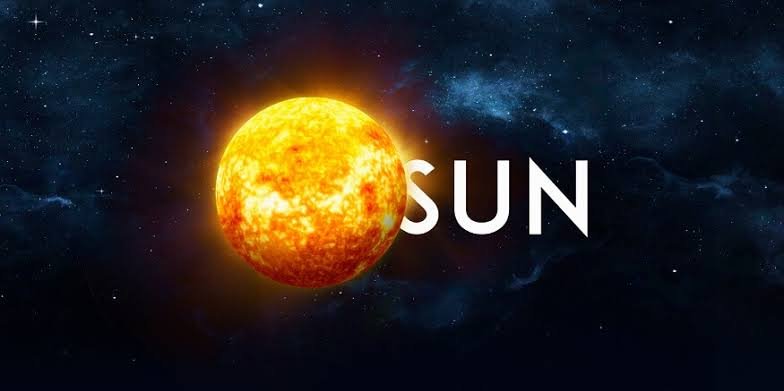
The Sun is the central and only star of our solar system. The planets, dwarf planets, asteroids, comets and smaller pieces of space debris orbit it because of its powerful gravity. Although the Sun appears much larger than every star in the night sky, that is mainly because it is our nearest star. Many other stars are much farther away, making them look like tiny points of light.
2. The Sun Is About 4.6 Billion Years Old
The Sun formed from a vast cloud of gas and dust that collapsed under gravity while the solar system was taking shape. Scientists estimate its age at about 4.6 billion years by studying the oldest rocks and materials in the solar system. The Sun is roughly halfway through the stable part of its life. It is expected to continue shining for about another five billion years before changing into a red giant.
3. It Contains Almost All the Mass of the Solar System
The Sun is enormous compared with the planets. It contains about 99.8 percent of the total mass of the solar system. Its diameter is approximately 1.4 million kilometres, nearly 100 times wider than Earth. More than 1.3 million Earths could fit inside its volume, although Earth’s material would be compressed under the Sun’s extreme gravity. This immense mass is what keeps the planetary system gravitationally organised.
4. The Sun Produces Energy Through Nuclear Fusion
The Sun shines because nuclear fusion occurs in its core. Under tremendous pressure and temperatures of about 15 million degrees Celsius, hydrogen nuclei combine to form helium. A small amount of mass is converted into a huge amount of energy. That energy slowly travels outward through the Sun and eventually escapes as light and other forms of radiation. The sunlight reaching Earth is a distant result of these reactions.
5. The Sun Has No Solid Surface
The Sun is a giant ball of extremely hot plasma, not a solid object like Earth. The visible layer is called the photosphere, which is the region from which much of the sunlight we see escapes. Above it are the chromosphere and the corona, the Sun’s outer atmosphere. Because the Sun is made of plasma, different parts rotate at different speeds instead of turning like one solid sphere.
6. Sunlight Takes About Eight Minutes to Reach Earth
The average distance between Earth and the Sun is about 150 million kilometres. Light travels extremely quickly, but it still needs approximately eight minutes and twenty seconds to cross this distance. When we look at the Sun, we see it as it was a little more than eight minutes earlier. This also means that if the Sun suddenly changed, Earth would not receive information about that change immediately.
7. Sunspots Are Cooler, Darker Magnetic Regions
Sunspots appear as dark patches on the photosphere. They are not actually cold; they are simply cooler than the surrounding surface, so they look darker by comparison. Strong concentrations of magnetic fields create them. Sunspots may last for days or months and can become sources of solar flares and other eruptions. Their number rises and falls during the Sun’s approximately eleven-year activity cycle.
8. The Sun Has an Eleven-Year Activity Cycle
The Sun changes from relatively calm periods to more active periods in a cycle lasting about eleven years. During solar maximum, sunspots, solar flares and coronal mass ejections become more common. The Sun’s magnetic poles also reverse during the cycle. Solar activity can produce beautiful auroras, but strong space-weather events may disturb radio communication, navigation systems, satellites and electrical grids on Earth.
9. The Corona Is Hotter Than the Visible Surface
One of the Sun’s fascinating mysteries is that its outer atmosphere, the corona, is much hotter than the visible photosphere beneath it. The photosphere is about 5,500 degrees Celsius, while parts of the corona can reach roughly two million degrees Celsius. Scientists study magnetic waves and the movement of energy in the solar atmosphere to understand how the corona becomes so hot. The question is known as the coronal heating problem.
10. The Sun’s Energy Makes Life on Earth Possible
Almost every living system on Earth depends directly or indirectly on solar energy. Plants use sunlight during photosynthesis to make food and release oxygen. The Sun drives the water cycle, influences weather and climate, and provides the energy that supports food chains. Solar heat also helps make Earth’s surface habitable. Without the Sun, our planet would become dark, frozen and unable to support life as we know it.
The Star That Sustains Our World
The Sun is more than a bright object above our heads. It is a powerful star, a source of energy and the gravitational centre of our planetary neighbourhood. Its fusion reactions illuminate Earth, its magnetic field creates changing space weather and its long life has shaped the history of our world. Studying the Sun helps scientists understand not only our own star but also billions of similar stars across the universe. Every sunrise is therefore a reminder that Earth is connected to a much larger cosmic system. The Sun may appear peaceful from the ground, but beneath its light is a world of motion, pressure, heat and extraordinary power.