A photograph can stop a smile, preserve a family memory and show us a place we may never visit. It can also reveal the movement of a bird’s wings, record a scientific discovery or make an ordinary street look extraordinary. Photography feels effortless today because a phone can capture an image in a fraction of a second, but every photograph is built on fascinating ideas about light, time, chemistry and human choice. The history of photography began with dark rooms, glass, metal plates and exposures that lasted for hours. It has grown into a powerful language used in art, journalism, science, medicine, astronomy and everyday communication. These ten facts explore how photography works, where it came from and why a picture can be far more than a simple copy of what the eye sees.
1. The Camera Began as a Dark Room
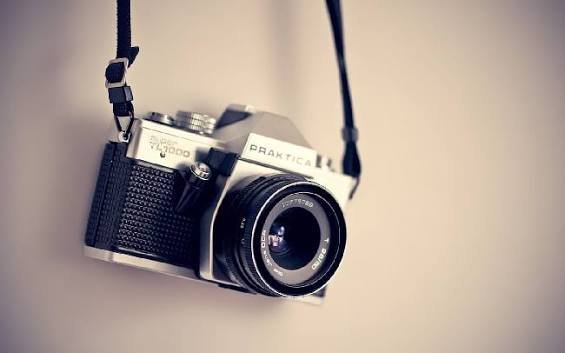
The basic idea behind a camera existed long before modern cameras. The camera obscura, which means “dark room,” used a small opening to allow light into a dark space. The light formed an inverted image of the outside scene on a wall or screen. Artists used this optical effect to study perspective and trace accurate outlines. A modern camera still follows the same principle: light enters through an opening, passes through an optical system and forms an image on a light-sensitive surface.
2. The First Permanent Photograph Took Hours to Make
French inventor Nicéphore Niépce created one of the earliest permanent photographs in the 1820s. His process, called heliography, used a metal plate coated with bitumen, a light-sensitive material. The plate had to remain exposed for a very long time, probably several hours. The resulting image showed the view from a window near Niépce’s home. It was not sharp or convenient by modern standards, but it proved that light could create a lasting picture without an artist drawing every line.
3. Photography Became Public in the Nineteenth Century
Louis Daguerre improved early photographic methods and introduced the daguerreotype, a process that produced highly detailed images on silver-plated copper plates. In 1839, the process was publicly announced, helping photography spread quickly across Europe and beyond. Early portraits required people to remain still for a long time, but the desire to preserve a person’s face made photography immediately popular. The invention changed portraiture because ordinary people could now have a visual record of themselves without paying for a painted portrait.
4. Exposure Depends on Three Main Controls
In traditional photography, exposure describes how much light reaches the film or image sensor. Three controls are especially important: aperture, shutter speed and ISO. Aperture changes the size of the lens opening. Shutter speed controls how long light enters. ISO describes the sensor or film’s sensitivity to light. These controls work together. A wide aperture may brighten a photograph and blur the background, while a fast shutter can freeze movement. Changing one setting often requires adjusting another to keep the image balanced.
5. A Camera Can Make Time Visible
Photography can record moments too fast for human vision to study clearly. High-speed photographs have shown the stages of a horse’s movement, the instant a balloon bursts and the shape of water droplets as they strike a surface. A very fast shutter captures a tiny slice of time, while a long exposure can show movement as a blur or streak. This gives photographers two opposite powers: they can freeze motion that normally disappears or stretch time into a visible pattern.
6. Focus Can Change the Meaning of a Photograph
Focus is not only a technical matter; it directs attention. A portrait with a sharp face and a soft background tells the viewer where to look. A landscape with detail from front to back can make the scene feel wide and deep. The amount of the image that appears acceptably sharp is called depth of field. Aperture, lens choice, distance and sensor size all influence it. Skilled photographers use focus deliberately to separate a subject, show relationships or create a particular mood.
7. Film and Digital Photography Record Light Differently
Film photography records light through chemical changes in a coating of light-sensitive material. The film must later be developed and printed or scanned. Digital cameras use an electronic image sensor made of millions of tiny light-sensitive units. The sensor converts light into electrical information, which becomes a digital file. Film and digital systems can produce beautiful images, but they encourage different working habits. Film makes each exposure feel limited, while digital photography allows immediate review and thousands of experiments.
8. Photography Is Important in Science and Medicine
Scientists use photography to observe events that are too small, distant, fast or dangerous to study directly. Microscopes connected to cameras record cells and microorganisms. Medical imaging helps doctors examine structures inside the body, while time-lapse photography reveals gradual changes such as plant growth. In astronomy, cameras collect faint light from distant stars and galaxies. Scientific photographs are not merely decorative pictures; they can provide measurements, preserve evidence and help researchers compare changes over time.
9. A Photograph Is a Choice, Not the Whole Reality
A camera records only a selected view. The photographer chooses where to stand, what to include, what to leave outside the frame and when to press the shutter. Light, colour, lens length and editing can all influence the viewer’s impression. Two people can photograph the same event and produce very different images. This does not make photography false, but it reminds us that every photograph has a viewpoint. In journalism and documentary work, careful captions and honest context are important because images can strongly influence belief.
10. Photography Preserves Memory and Builds Identity
Photographs help families remember people, places and occasions that may otherwise fade from personal memory. They also help communities preserve festivals, buildings, clothing, work and everyday life. A single photograph can become valuable decades later because it records details nobody thought to write down. At the same time, people use photographs to express identity, emotion and belonging. Whether printed in an album or shared online, a photograph can connect private experience with a larger human story.
More Than a Picture
Photography began as an experiment with light, chemicals and patient observation, but it soon became a way for people to remember, investigate and communicate. A camera can freeze a fraction of a second, reveal an invisible detail or preserve an ordinary moment for generations. Yet equipment alone does not create a meaningful photograph. Vision, timing, composition and honesty matter just as much. The most memorable images do more than show what was present; they help us notice why the moment mattered. That is why photography remains both a scientific achievement and one of the most personal forms of storytelling.