More than four thousand years ago, long before modern highways, smartphones or concrete towers, a remarkable civilisation was taking shape across the plains of the Indus River. Its people built carefully planned cities, raised brick houses, created covered drains and traded with distant lands. They measured goods with surprising precision, collected water in large reservoirs and produced beautiful seals, beads, pottery and cotton textiles. Yet this highly organised society left behind one of history’s greatest mysteries: its written symbols have still not been fully deciphered. The civilisation is commonly called the Harappan or Indus Valley Civilisation, named after Harappa, one of the first major sites to be identified. It spread across parts of present-day Pakistan and north-western India and became one of the world’s earliest urban cultures. Here are ten fascinating facts that bring the Harappan world closer to life.
1. It Was One of the World’s Earliest Urban Civilisations
The Harappan Civilisation developed from earlier farming communities and reached its mature urban phase around 2600 to 1900 BCE. It was one of the great Bronze Age civilisations, existing broadly during the same period as ancient Egypt and Mesopotamia. Harappan settlements were not limited to a single city. Archaeologists have identified more than a thousand sites of different sizes, including large cities, small towns, villages and trading centres. This wide network suggests that the civilisation was a connected cultural world rather than one isolated settlement ruled from a single capital.
2. Its Cities Covered a Huge Area
The Harappan world stretched across a surprisingly large part of South Asia. Important sites have been found in present-day Pakistan and India, from the Indus plains to Gujarat, Haryana, Rajasthan and western Uttar Pradesh. Harappa and Mohenjo-daro are the best-known cities, but Dholavira, Lothal, Rakhigarhi, Kalibangan and hundreds of other settlements are equally important for understanding the civilisation. The distances between sites show that people, goods, ideas and technologies moved across different landscapes, including river valleys, dry regions, coastal areas and the edges of deserts.
3. Harappan Cities Were Carefully Planned
The streets of major Harappan cities were often laid out in a grid, with roads crossing at regular angles. Settlements commonly had separate raised and lower areas, although the exact purpose of every section is still debated. Houses were built with standardised baked bricks, and many had courtyards, rooms, wells and bathing spaces. This level of planning required rules, skilled workers and some form of civic authority. It also shows that Harappan builders thought about drainage, movement, construction and public space as parts of one organised urban design.
4. Their Drainage System Was Remarkably Advanced
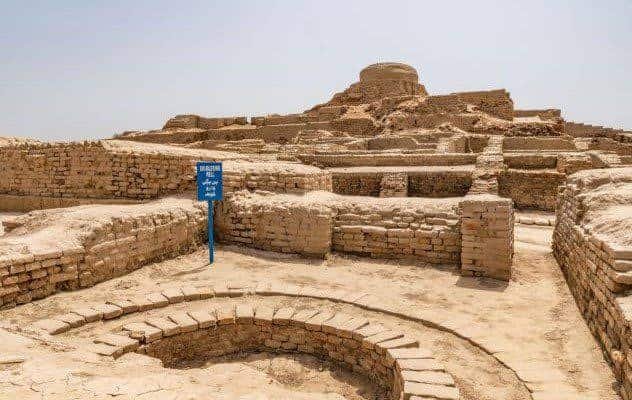
One of the most impressive Harappan achievements was sanitation. Many houses had bathing areas connected to covered drains that ran along streets. Wastewater could be directed into soak pits or larger channels, helping keep residential areas cleaner. At Mohenjo-daro, archaeologists found an extensive network of drains, wells and structures for managing wastewater. The system was not identical in every settlement, but its presence across many sites shows that water and sanitation were treated as important community concerns. In some ways, the Harappans planned urban hygiene more systematically than many later ancient societies.
5. Dholavira Shows Extraordinary Water Management
Dholavira, located in Gujarat’s Kutch region, reveals how Harappan engineers adapted to a dry environment. The city contained a series of reservoirs and channels designed to collect and store rainwater and seasonal flows. Its builders used the natural landscape as part of the water system, creating structures that could support life during difficult seasons. Dholavira also had fortifications, organised zones and a distinctive use of stone. The site demonstrates that Harappan cities did not all follow one identical plan. They shared broad ideas but adapted their buildings and technology to local conditions.
6. The Great Bath Is Famous, but Its Exact Purpose Is Unknown
Mohenjo-daro contains a large, carefully built tank known as the Great Bath. It has steps, a waterproof floor and surrounding rooms, suggesting that it was a significant public structure. Many historians believe it may have been used for ritual bathing or important communal activities, but there is no written explanation confirming its purpose. The building is valuable precisely because it reveals both achievement and uncertainty. Archaeologists can study its design and construction, but they must avoid presenting guesses about religion or government as proven facts.
7. Harappans Used Standard Weights and Measures
Trade and taxation become much easier when buyers and sellers trust the same system of measurement. Harappan sites have produced carefully made stone weights in standardised sizes, along with measuring tools and objects that may have helped builders maintain accuracy. Bricks also often followed consistent proportions across widely separated settlements. Such uniformity suggests strong traditions of craft production and administration. It does not necessarily prove that one emperor controlled every city, but it does show that Harappan communities shared rules and standards over a very large area.
8. Their Script Has Not Yet Been Deciphered
The Harappans left behind symbols on seals, pottery, tablets, tools and other objects. These signs are usually called the Indus or Harappan script. Unfortunately, the inscriptions are generally short, and no bilingual text has been found to provide a reliable translation. As a result, scholars still cannot confidently read the language or explain the entire writing system. The seals often show animals, including a famous one-horned figure, as well as symbols and short inscriptions. This undeciphered script is one reason the civilisation still holds so many mysteries.
9. They Traded with Distant Regions
Harappan merchants were connected to wider Bronze Age trade networks. Archaeological evidence points to contact with Mesopotamia, the Persian Gulf and the Oman Peninsula. Harappan goods and styles have been found far from the Indus region, while materials such as metals, stones and shells travelled into Harappan cities. Seals may have served as marks of ownership, identification or commercial authority. Lothal and other settlements in Gujarat show the importance of coastal and maritime connections. Trade was not only about wealth; it also carried ideas, artistic styles and technical knowledge between societies.
10. The Civilisation Declined Gradually, Not in One Sudden Disaster
After about 1900 BCE, many large Harappan cities declined, and urban life changed across the region. Scholars have proposed several possible causes, including shifting rivers, changing monsoon patterns, floods, droughts, soil problems and the weakening of long-distance trade. Different places may have experienced different pressures. There is no single explanation accepted for every settlement, and the old idea that one invading force simply destroyed the civilisation is not supported as a complete answer. Harappan traditions continued in later communities, even after the great cities lost their earlier size and organisation.
Why the Harappan Civilisation Still Matters
The Harappan Civilisation remains fascinating because it combined practical intelligence with artistic skill. Its people built cities with planned streets, managed water in difficult environments, used standard measures, traded across great distances and created objects that still speak to us thousands of years later. At the same time, their unreadable script reminds us how much of the past can disappear even when buildings survive. Harappa, Mohenjo-daro, Dholavira and the other sites are not just ancient ruins; they are evidence of South Asia’s deep urban history. The more archaeologists discover, the clearer it becomes that the Harappans were not a forgotten footnote. They were pioneers of city life whose achievements still invite wonder and careful study.