Mars has fascinated humans for thousands of years. Its reddish colour is visible in the night sky, yet the planet is far more complex than a glowing dot. It has ancient river valleys, enormous volcanoes, powerful dust storms, two unusual moons and a day that is surprisingly similar to Earth’s. Robotic explorers have shown that Mars was once warmer and wetter, raising an exciting question: could life have existed there long ago? These ten facts explain why the Red Planet remains one of the most important worlds in space exploration.
1. Mars Is the Fourth Planet from the Sun
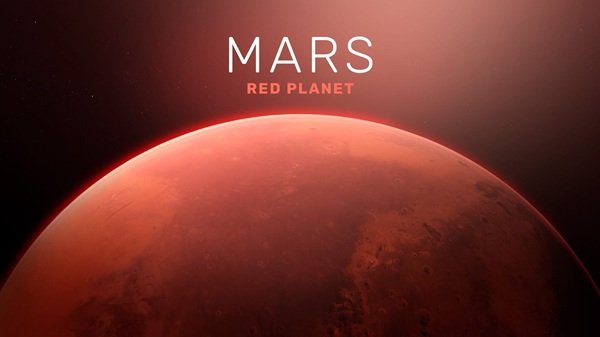
Mars is the fourth planet from the Sun and the seventh-largest planet in our solar system. It is a terrestrial planet, made mainly of rock and metal like Earth, Venus and Mercury. Mars is smaller than Earth, with a diameter about half as wide as our planet. Its lower gravity means a person would weigh much less there, although their mass would remain the same.
2. Iron Gives Mars Its Red Colour
Mars looks red because iron-bearing minerals in its rocks and soil reacted with oxygen and became oxidised, much like rust on iron exposed to air and moisture. Fine rusty dust covers large parts of the surface and can be lifted into the atmosphere. From space, this dust gives Mars its familiar red-orange appearance. The colour helped ancient cultures connect the planet with gods of war.
3. A Martian Day Is Nearly as Long as an Earth Day
One rotation of Mars takes about 24.6 Earth hours. Martian solar days are called sols, and a sol is roughly 39 minutes longer than an Earth day. This small difference matters to rover teams: scientists and engineers often work on “Mars time” so their commands match sunrise, sunset and local conditions at a landing site. A Martian year, however, is much longer—about 687 Earth days.
4. Mars Has Two Small Moons
Mars has two moons named Phobos and Deimos. They are tiny, irregular and thought to be captured asteroids or leftover debris from the early solar system. Phobos is the larger and closer moon. It rises and sets unusually quickly because it orbits Mars faster than Mars rotates. Phobos is gradually moving closer to Mars and may eventually break apart or collide with the planet millions of years from now.
5. Mars Has the Tallest Volcano in the Solar System
Olympus Mons on Mars is the tallest known volcano in the solar system. It rises about 22 kilometres above the surrounding plains, nearly three times the height of Mount Everest measured from sea level. Olympus Mons is a shield volcano, built by many layers of fluid lava. Mars could grow such enormous volcanoes because it has lower gravity and lacks Earth’s moving tectonic plates, which would spread volcanic activity across different regions.
6. Valles Marineris Is a Giant Canyon System
Mars is home to Valles Marineris, a canyon system stretching roughly 4,000 kilometres across the planet. In places, it is several times deeper and much wider than the Grand Canyon. Scientists think it formed mainly through tectonic cracking and later erosion, rather than by a single river. The enormous system shows that Mars has experienced powerful geological changes even though the planet is now cold and dry.
7. Mars Once Had Flowing Water
Mars is dry today, but its surface preserves strong evidence of an ancient wetter past. Orbiters and rovers have found dried river channels, lake sediments, delta formations and minerals that form in the presence of water. Perseverance explored Jezero Crater because its ancient delta and lake may have preserved signs of past microbial life. This does not prove that life existed, but it shows that some places on ancient Mars may once have been habitable.
8. The Atmosphere Is Thin and Mostly Carbon Dioxide
Mars has a very thin atmosphere compared with Earth. It is made mostly of carbon dioxide, with smaller amounts of nitrogen and argon. The thin air cannot retain heat effectively, so Mars is generally freezing. It also provides little protection from harmful radiation and makes liquid water unstable on the surface today. Spacecraft and future astronauts would need carefully designed shelters, suits and life-support systems.
9. Mars Has Dust Storms That Can Cover the Planet
Fine dust is constantly moved by winds on Mars. Local storms can grow into regional events, and in some years a storm can spread around much of the planet. Dust blocks sunlight, reducing the power available to solar panels and making surface operations difficult. The dust is also extremely fine and can cling to equipment. Understanding these storms is important for planning long missions and protecting future explorers.
10. Mars Is Explored by a Fleet of Robots
Mars is the only planet beyond Earth where we have successfully operated rovers on the surface. Missions such as Curiosity and Perseverance study rocks, weather and geology, while orbiters map the planet and relay communications. Ingenuity, a small helicopter, demonstrated powered flight in the thin Martian atmosphere. These machines are not searching for little green aliens; they are gathering evidence about Mars’ climate, geology and possible ancient habitability.
Conclusion
Mars is both familiar and alien. Its day resembles ours, its rusty soil is easy to recognise and its ancient landscapes preserve clues about a world that may once have been warmer and wetter. Yet its thin atmosphere, freezing temperatures, radiation and violent dust storms make exploration extremely difficult. Each rover and orbiter adds another piece to the story. The Red Planet continues to inspire scientists because it may help answer one of humanity’s greatest questions: is Earth the only place where life has ever existed?