Education is often pictured as a teacher, a blackboard and a row of desks, but learning is much bigger than a classroom. A child learns language through conversation, a student understands science through curiosity, and an adult develops new skills through work and experience. Education changes as society changes, yet its central purpose remains the same: helping people understand the world and take part in it with confidence. Research shows that learning is shaped by play, memory, relationships, practice and opportunity. It is also influenced by a learner’s health, home environment, confidence and access to good teachers and resources. These ten facts reveal why education is not simply the process of passing examinations. It is a lifelong human journey that begins early, continues in many places and can transform individuals, families and communities.
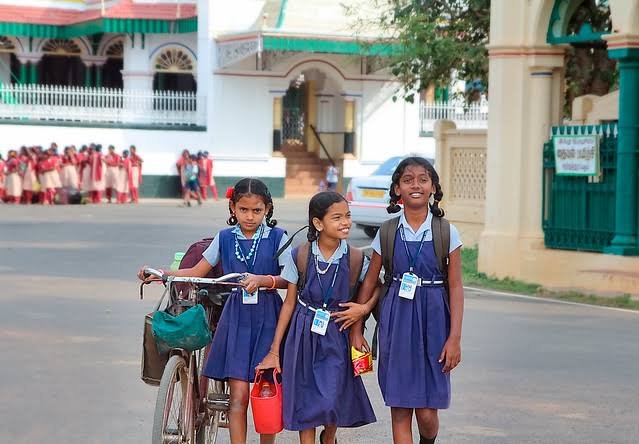
1. Learning Begins Before a Child Enters School
The foundations of learning are built during the early years through talking, listening, movement, play and relationships. Young children are constantly developing language, attention, memory and social skills long before they learn to read a textbook. A baby listening to a caregiver’s voice is beginning to recognise patterns in language. A child sorting objects is developing early mathematical thinking. This does not mean that formal lessons should begin too early. It means that ordinary conversations, stories, songs and safe exploration are already important forms of education. Supportive early experiences can make later learning easier and more enjoyable.
2. Play Is a Powerful Educational Tool
Play may look like entertainment, but it gives children opportunities to solve problems, test ideas, practise language and understand other people’s feelings. Building with blocks teaches balance and planning. Pretend games encourage imagination and social understanding. Drawing and making things develop coordination and creative expression. Games with rules teach children to wait, cooperate and handle both success and disappointment. Well-planned play is therefore not the opposite of learning; for young children, it is often one of the most natural ways to learn. Play also keeps curiosity alive, which is essential for education at every age.
3. Education Is Recognised as a Human Right
Education is not meant to be a privilege available only to a small group. International agreements recognise education as a human right, and the United Nations Sustainable Development Goal 4 calls for inclusive, equitable quality education and lifelong learning opportunities for everyone. This idea connects education with dignity, equality, employment, health and participation in society. A person who can read, understand information and express ideas has more power to make decisions about work, health and family life. Treating education as a right also places a responsibility on governments to remove barriers that exclude learners.
4. Learning Does Not Stop at the School Gate
A school is only one part of a much wider learning system. People learn at home, in libraries, workplaces, museums, communities and online. A mechanic learns from experience, a parent learns while helping with homework, and an adult may learn a new language through daily practice. Informal learning can be just as meaningful as a formal lesson when a person asks questions, practises a skill or reflects on experience. This is why education is better understood as lifelong and life-wide. Certificates are useful, but they do not represent everything a person knows or can do.
5. Remembering Helps the Brain Learn
Rereading can create familiarity without proving recall. Retrieval practice—trying to answer without looking—strengthens learning because it makes the brain reconstruct the information. Short quizzes, flashcards, self-questioning and explaining a topic from memory can reveal gaps that quiet reading hides. Mistakes during practice are not necessarily signs of failure; they show what needs more attention. When learners check their answers and correct errors, they create stronger connections between ideas. This is why a student who closes the book and tries to explain a lesson may learn more than one who reads the same page repeatedly.
6. Spaced Study Is Usually Better Than Last-Minute Cramming
Learning a topic in several sessions spread across days or weeks generally gives memory more opportunities to strengthen than studying everything in one exhausting sitting. Spaced practice can feel harder because the learner must recall information after a delay, but that difficulty can support longer-lasting learning. A useful routine may include reviewing a lesson on the same day, again after two or three days, and once more the following week. Regular review is usually more dependable than an all-night study session, which may help short-term familiarity but often leaves knowledge fragile.
7. Good Education Is More Than Memorising Facts
Facts are important, but education also develops reasoning, communication, creativity, judgement and the ability to solve unfamiliar problems. A student who understands why an idea works can often apply it in a new situation. In science, this means using a principle to explain a new observation. In mathematics, it means choosing a method instead of copying a remembered step. In language, it means understanding meaning and expressing an original thought. Strong education therefore balances knowledge with questions, discussion, practice and real-world use.
8. Teachers Do More Than Deliver Information
A teacher can explain a difficult idea, but the role also includes encouraging effort, noticing confusion, giving feedback and helping students feel safe enough to ask questions. Human connection matters because students do not learn as machines. Motivation, confidence and trust influence whether a learner is willing to attempt something difficult and continue after making mistakes. A good teacher also helps students become independent by showing them how to organise work, check understanding, search for reliable information and take responsibility for improvement.
9. Education Can Change More Than One Life
When a person gains literacy, numeracy or professional skills, the benefits often reach beyond that individual. Education can improve access to work, strengthen decision-making and help people participate more fully in their communities. It can also help people understand public information, protect their health and speak up for their rights. Parents who gain confidence in learning may support their children’s education more actively, creating a positive effect across generations. In this way, one school, teacher or scholarship can influence an entire family’s future.
10. Equal Access Remains a Global Challenge
The value of education is widely recognised, but opportunity is still uneven. Poverty, conflict, disability, discrimination, distance and lack of learning resources can prevent children and adults from studying. UNESCO reports that millions of children remain out of school and hundreds of millions of adults lack basic literacy. Even students who attend school may not receive the same quality of teaching or learning materials. Expanding access requires safe schools, trained teachers, inclusive materials, supportive families and policies that help learners continue at every age.
Education Is a Journey, Not a Single Destination
Education begins with curiosity and grows through practice, guidance and opportunity. It can happen in a classroom, during a game, through a conversation or while a person learns from a mistake. The strongest education does more than prepare someone for an examination; it develops the ability to think, adapt, communicate and contribute. It gives people tools to question false information, understand different viewpoints and respond to change. When learning is made accessible to everyone, it becomes one of the most powerful forces for personal growth and social progress. Education does not promise that every path will be easy, but it gives people a better chance to choose their path with knowledge, confidence and hope.