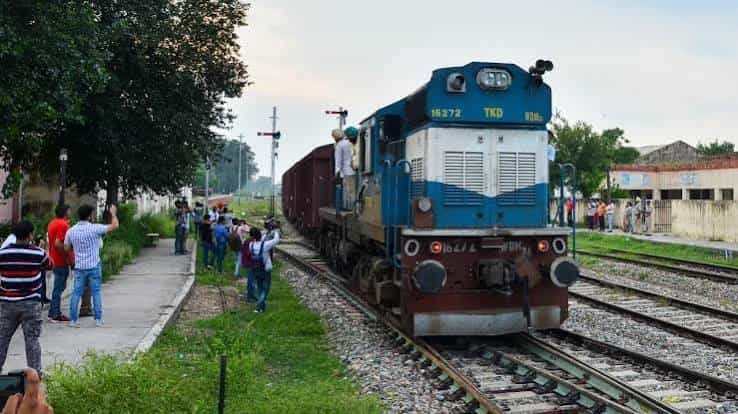
Before comparing the trains, it is important to distinguish between maximum operating speed, design speed, and average journey speed. A train may be designed for 180 km/h but operate at a lower speed because of track conditions, scheduled stops, and railway safety restrictions. Indian Railways has reported maximum operating speeds of 160 km/h for Vande Bharat services, while actual average speeds vary by route.
1. Vande Bharat Express
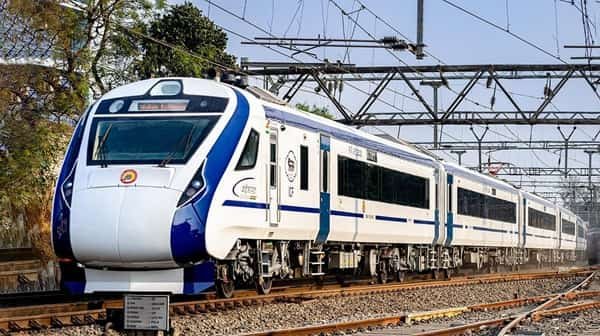
Vande Bharat Express is India’s best-known modern semi-high-speed train service. These domestically developed trainsets use distributed traction, allowing the train to accelerate without relying on a separate locomotive in the conventional way.
Vande Bharat services offer air-conditioned seating, modern passenger information systems, automatic doors, and other contemporary features. Many operate at maximum speeds of up to 160 km/h on approved sections, although the average journey speed depends on the route.
2. Gatimaan Express
Gatimaan Express was introduced in 2016 as India’s first semi-high-speed train service. It connects the Delhi area with Agra and has operated on routes extending towards Jhansi.
The service is known for its relatively short journey time and comfortable air-conditioned coaches. Its operating speed can reach 160 km/h on approved sections, but stops and route conditions affect the overall average speed.
3. New Delhi–Bhopal Shatabdi Express
The New Delhi–Bhopal Shatabdi Express, serving Rani Kamlapati station in Bhopal, is one of India’s prominent premium intercity services. It connects the national capital with central India and is designed for relatively fast daytime travel.
Its schedule, limited stops, and established service make it a popular option for passengers travelling between Delhi and Bhopal. Maximum speeds depend on the approved limits of individual sections.
4. Mumbai Rajdhani Express
The Mumbai Rajdhani Express connects Mumbai with New Delhi and is one of India’s best-known long-distance premium trains. It offers air-conditioned accommodation and is designed to provide a comparatively fast journey between the two major cities.
Its route includes sections with different speed restrictions. Although it is an important fast long-distance service, its average speed is lower than its maximum permitted speed because of distance, stops, and railway operating conditions.
5. Howrah Rajdhani Express
The Howrah Rajdhani Express links Kolkata’s Howrah station with New Delhi. It is a major premium service on one of India’s busiest long-distance rail corridors.
The train is recognised for its overnight journey, air-conditioned accommodation, and limited-stop schedule. Its actual speed varies across the route, with infrastructure and operating restrictions influencing total travel time.
6. New Delhi–Kalka Shatabdi Express
The New Delhi–Kalka Shatabdi Express is a premium daytime train serving passengers travelling between Delhi and Kalka in Haryana. It is particularly useful for people heading towards the Himalayan foothills and destinations accessible from Kalka.
Its relatively limited stops and comfortable seating make it a popular choice for intercity journeys. The maximum speed achieved depends on the section and the operating timetable.
7. Tejas Express
Tejas Express services were introduced to offer modern passenger facilities on selected Indian routes. Depending on the service, features can include comfortable seating, onboard entertainment or information systems, and contemporary coach interiors.
Tejas trains operate on specific corridors rather than across the entire railway network. Their maximum speed depends on the infrastructure and route approvals, so passengers should check the particular service rather than assume every Tejas train runs at the same speed.
8. Vande Bharat Sleeper Express
Vande Bharat Sleeper was developed for longer journeys where passengers need overnight accommodation. The first regular Vande Bharat Sleeper service, connecting Howrah and Kamakhya, began operating in January 2026.
The sleeper version extends the Vande Bharat concept beyond daytime chair-car travel. Its practical journey speed depends on the route, stops, and approved operating limits, which may differ from those of chair-car Vande Bharat services.
9. Duronto Express
Duronto Express trains connect major cities through relatively limited-stop services. Several routes are designed to reduce journey times over long distances, with some services offering air-conditioned and sleeper accommodation.
Duronto trains use conventional locomotive-hauled formations, and their speeds depend on the route and timetable. They remain an important option for passengers seeking long-distance travel with fewer intermediate stops.
10. Humsafar Express
Humsafar Express services are designed primarily for long-distance journeys, generally using fully air-conditioned sleeper accommodation on applicable services. They connect selected cities and provide an option for passengers seeking overnight travel.
Their operating speeds vary by corridor, and they are not uniformly faster than other express services. Their inclusion here reflects their role among modern long-distance passenger trains rather than a claim that they are always among the ten fastest by average speed.
Top 10 Fastest Trains in India
The following list covers notable fast passenger services on India’s railway network. The order is indicative rather than a precise ranking by average speed, because speeds differ between individual routes and timetables.
| Rank | Train | Notable route | Maximum operating speed on eligible sections |
| 1 | Vande Bharat Express | Multiple routes | Up to 160 km/h |
| 2 | Gatimaan Express | Delhi–Agra–Jhansi corridor | Up to 160 km/h |
| 3 | New Delhi–Bhopal Shatabdi Express | New Delhi–Rani Kamlapati | Up to 150 km/h on eligible sections |
| 4 | Mumbai Rajdhani Express | Mumbai–New Delhi | Up to 130 km/h on eligible sections |
| 5 | Howrah Rajdhani Express | Howrah–New Delhi | Up to 130 km/h on eligible sections |
| 6 | New Delhi–Kalka Shatabdi Express | New Delhi–Kalka | Up to 130 km/h on eligible sections |
| 7 | Tejas Express | Selected routes | Up to 130 km/h on eligible sections |
| 8 | Vande Bharat Sleeper Express | Howrah–Kamakhya | Route-dependent; lower than chair-car Vande Bharat on some sections |
| 9 | Duronto Express | Selected long-distance routes | Up to 130 km/h on eligible sections |
| 10 | Humsafar Express | Selected long-distance routes | Up to 130 km/h on eligible sections |
Speed figures refer to operating capability on eligible sections, not the average speed for the entire journey. Exact limits vary by route, train number, and timetable.
What Determines a Train’s Speed?
Several factors influence how fast a train can travel:
- Track quality: Straight, well-maintained track can support higher speeds than sharp curves or sections requiring restrictions.
- Signalling and safety systems: Trains must operate within approved safety limits.
- Number of stops: More stops reduce average journey speed.
- Train design: Acceleration, braking, and the type of rolling stock affect journey performance.
- Route congestion: Busy junctions and shared tracks can cause delays or speed restrictions.
Conclusion
India’s fastest passenger trains include Vande Bharat Express, Gatimaan Express, premium Shatabdi services, Rajdhani Express trains, Tejas Express, and other modern long-distance services. Vande Bharat and Gatimaan can reach operating speeds of up to 160 km/h on approved sections, while many other premium services operate at lower limits depending on the route.
The most useful comparison is the scheduled journey time for your specific route, not maximum speed alone. Checking the current timetable and train number will help you identify the quickest practical option for your journey in 2026.
Frequently Asked Questions
Q. Which is the fastest train in India in 2026?
Vande Bharat Express is among India’s fastest regular passenger trains, with maximum operating speeds of up to 160 km/h on approved sections. Gatimaan Express can also reach this speed on eligible sections.
Q. Is the design speed the same as the operating speed?
No. Design speed refers to the speed a train is engineered to achieve under specified conditions. Operating speed is the limit permitted for actual service.
Q. Is Vande Bharat faster than Rajdhani Express?
On some routes, Vande Bharat can operate at a higher maximum speed. However, journey times depend on the specific route, distance, stops, and timetable.
Q. Does the fastest train always have the shortest journey time?
No. A train’s total journey time depends on distance, stops, track conditions, and scheduling, not just its highest speed.