A mirror can turn a dark room into a place of light, make a small space appear larger and show us a face we cannot normally see. We use mirrors while dressing, driving, decorating homes and examining tiny details, yet the science behind that familiar reflection is wonderfully precise. A smooth surface sends light back in an organised way, creating an image that seems to exist behind the glass. Mirrors have also travelled far beyond bathrooms and bedrooms. They have helped ancient people see themselves, guided vehicles, focused sunlight, enlarged faces and allowed space telescopes to study distant galaxies. These ten facts reveal the history, science and surprising uses of one of the simplest-looking objects in everyday life.
1. Natural Mirrors Existed Before Manufactured Mirrors
Long before people made mirrors, they could see reflections in still water. Humans later discovered that highly polished stones and volcanic glass could also reflect an image. Obsidian, a dark volcanic glass, was used to make mirrors in ancient Mesoamerica. Museums still preserve Aztec obsidian mirrors, showing that early mirrors were not always made of glass or shiny metal. Their reflections were usually darker and less clear than those of modern mirrors, but the basic idea was already the same: a smooth surface returning light to the observer.
2. Ancient Mirrors Were Often Made of Polished Metal
For centuries, people made mirrors by polishing bronze, copper, silver or other metals. Ancient Egyptian, Greek, Roman, Chinese and Japanese cultures all used metal mirrors. The front surface was polished until it became reflective, while the back could carry handles, inscriptions or beautiful designs. A bronze mirror was more durable than glass, but it could tarnish and usually produced a dimmer image. Many surviving ancient mirrors are valuable today not only for their reflection but also for the art engraved on their backs.
3. A Modern Mirror Is Usually Glass with a Metallic Backing
Ordinary glass is smooth and transparent, but it is not a strong reflector by itself. To make a modern mirror, manufacturers place a thin reflective coating behind the glass. Silver, aluminium, chrome and other metals may be used for different purposes. The glass provides a very smooth front surface and protects the delicate coating from scratches. A nineteenth-century process for depositing silver on glass made mirrors brighter, cheaper and easier to produce on a large scale.
4. Mirrors Follow a Simple Law of Reflection
When a beam of light strikes a mirror, the angle at which it arrives equals the angle at which it leaves. This is called the law of reflection. The angles are measured from an imaginary line called the normal, which is drawn perpendicular to the mirror’s surface. The law explains why a mirror can show an object that is not directly in front of it. It also allows engineers to design periscopes, vehicle reflectors, optical instruments and many other devices.
5. A Flat Mirror Forms a Virtual Image
The image in an ordinary flat mirror appears behind the glass, but no light actually travels to that location. This is called a virtual image. The image appears the same distance behind the mirror as the object is in front of it, and it is usually the same size as the object. If you stand two metres in front of a plane mirror, your image seems to be two metres behind it. The image is upright, but it cannot be projected onto a screen because the light rays do not truly meet there.
6. Mirrors Do Not Really Reverse Left and Right
People often say that a mirror reverses left and right, but this is not quite accurate. A mirror reverses the direction from front to back. When you raise your right hand, the image appears to raise the hand on the opposite side because the image is facing you. The mirror has not exchanged left and right by itself. This becomes easier to understand if you imagine turning a person around to face you: the change is a front-back reversal, not a mysterious sideways swap.
7. Curved Mirrors Can Magnify or Widen a View
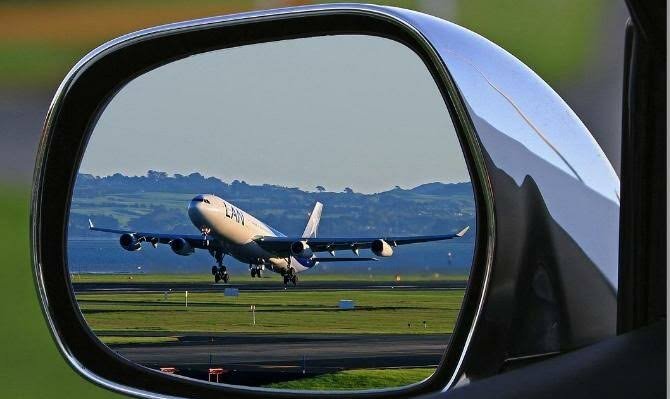
A concave mirror curves inward like the inside of a bowl. It can focus light and produce a magnified upright image when an object is close to it, which is why it is useful in shaving and makeup mirrors. A convex mirror curves outward and spreads reflected rays. It produces a smaller image but shows a wider area, making it useful in vehicle side mirrors, shops and road safety. The words are easy to remember: concave means “caved in,” while convex bulges outward.
8. Space Telescopes Depend on Carefully Shaped Mirrors
Large telescopes often use mirrors instead of lenses because mirrors can be made thinner and lighter while still collecting a great deal of light. The Hubble Space Telescope uses a mirror-based optical system, while the James Webb Space Telescope uses 18 gold-coated beryllium mirror segments. Gold was chosen because it reflects infrared light effectively. The segments fold for launch and then align in space with extraordinary precision, creating one large primary mirror.
9. Special Mirrors on the Moon Help Measure Distance
Apollo astronauts placed mirror-like devices called retroreflector arrays on the Moon. Unlike a regular flat mirror, a retroreflector sends incoming light back toward its source. Scientists fire laser pulses from Earth at these arrays and measure how long the light takes to return. The measurements help determine the Moon’s distance, orbit and motion with remarkable precision. These small devices continue to support lunar science decades after the astronauts left them there.
10. A Telescope Mirror Can Be Made from Liquid
A mirror does not always have to be a solid sheet of glass or metal. NASA has studied the idea of a fluidic telescope, in which a reflective liquid forms a smooth curved surface in space. With the correct conditions, the liquid can shape itself into a bowl-like mirror. Such a mirror could potentially become much larger than traditional solid mirrors and might even repair itself after a small disturbance. The idea is still experimental, but it shows how far mirror technology can develop.
A Surface That Reveals the World
Mirrors look simple because they are part of everyday life, but their story reaches from polished obsidian and ancient bronze to gold-coated space telescopes and experimental liquid optics. They obey a clean physical law, create virtual images, change the way light travels and help scientists measure the Moon. A mirror is therefore more than a surface that shows our face. It is a carefully designed tool that connects human curiosity with the behaviour of light—and sometimes allows us to see places far beyond Earth.