Ranaghat Junction is one of the busiest and most important railway stations in Nadia district, West Bengal. It serves Ranaghat city and nearby areas, and works as a major rail point for passengers travelling towards Sealdah, Krishnanagar, Lalgola, Gede, Bangaon, Kalyani, Naihati, Dum Dum, Kolkata and other connected routes. The station is especially useful for daily commuters, students, office-goers, small traders, families and passengers using Kolkata suburban railway services.
Ranaghat Junction has strong railway importance because it connects multiple suburban and regional routes. It is a junction station on the Sealdah–Ranaghat line, Ranaghat–Gede line, Ranaghat–Bangaon line and the Lalgola branch line. Public station details list it as an at-grade Kolkata Suburban Railway junction station with 6 platforms and 10 tracks.
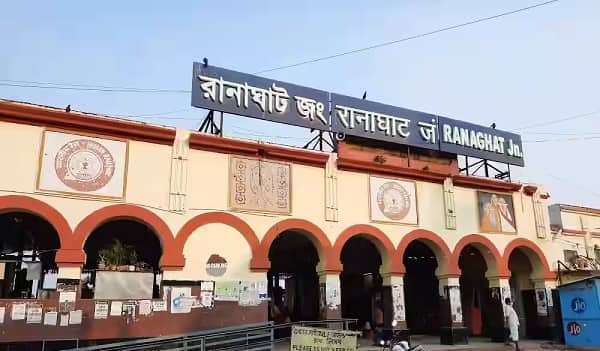
Overview of Ranaghat Junction
| Detail | Information |
| Station Name | Ranaghat Junction Railway Station |
| Station Code | RHA |
| City | Ranaghat |
| District | Nadia |
| State | West Bengal |
| Address | GNPC Road, Ranaghat, Nadia, West Bengal |
| Railway Zone | Eastern Railway |
| Railway Division | Sealdah Division |
| Station Type | Kolkata Suburban Railway junction station |
| Main Railway Lines | Sealdah–Lalgola line, Ranaghat–Gede line, Ranaghat–Bangaon line |
| Number of Platforms | 6 platforms |
| Number of Tracks | Around 10 tracks |
| Station Structure | At-grade railway station |
| Status | Functioning and electrified |
| Opened | 1862 |
| Main Passenger Use | Kolkata suburban travel, Nadia district movement, Gede-side travel, Bangaon-side travel and Lalgola/Krishnanagar route connectivity |
| Nearby Areas | Ranaghat town, local markets, GNPC Road side, bus routes, residential colonies and road routes towards Krishnanagar, Chakdaha and Santipur |
Ranaghat Junction Station Code
The station code of Ranaghat Junction is RHA. This code is used for train ticket booking, PNR enquiry, live train status, reservation chart checking and train timetable searches.
Passengers should not confuse Ranaghat Junction with nearby stations such as Chakdaha, Payradanga, Krishnanagar City Junction, Santipur, Gede, Bangaon Junction or Kalyani. These stations are connected through nearby routes, but for Ranaghat city and its main junction station, the correct code is RHA.
The station code is especially important because Ranaghat is a route-changing point. While booking or checking trains, passengers should confirm whether the service is going towards Sealdah, Krishnanagar/Lalgola, Gede or Bangaon side.
Location of Ranaghat Junction
Ranaghat Junction is located on GNPC Road, Ranaghat, Nadia district, West Bengal. Its location is useful for passengers coming from Ranaghat town, local markets, residential areas, schools, colleges, business points and nearby villages.
The station is a practical rail point for people travelling daily between Nadia district and Kolkata. Many passengers use Ranaghat for Sealdah-bound local trains, while others use it for onward travel towards Krishnanagar, Lalgola, Gede and Bangaon.
Local autos, rickshaws, e-rickshaws, shared vehicles and private transport are generally used around the station area. Passengers going towards local markets, bus stands, nearby colonies or rural routes should check transport availability according to arrival time, especially late at night.
Railway Zone and Division Importance
Ranaghat Junction comes under the Eastern Railway zone and is connected with the Sealdah railway division. Sealdah division covers railway services across Kolkata, North 24 Parganas, South 24 Parganas, Nadia and Murshidabad, with routes such as Sealdah–Ranaghat–Gede, Ranaghat–Krishnanagar City–Lalgola and Ranaghat–Bangaon listed under its network.
This gives Ranaghat strong railway importance in the suburban and regional rail network of southern Bengal. The station works like a gateway between Kolkata’s suburban system and Nadia/Murshidabad-side passenger movement.
Its importance is not only for long-distance travellers. Ranaghat is more important as a daily commuter junction, where thousands of passengers depend on local and regional trains for work, education and business travel.
Platforms at Ranaghat Junction
Ranaghat Junction has 6 platforms and around 10 tracks. The station is built as an at-grade railway station and is listed as functioning and electrified.
The platforms handle local trains, suburban services, passenger trains and regional trains moving in different directions. Because Ranaghat is a junction station, passengers should always check the platform number before moving with luggage. Platform changes can happen due to train crossing, late-running trains, local train regulation or operational adjustments.
Morning and evening hours are usually busier because many passengers travel between Ranaghat and Kolkata-side stations. The station may also see more crowd during Durga Puja, Kali Puja, Jagaddhatri Puja, winter holidays, exam seasons, weekend travel and major local events.
Passengers travelling with senior citizens, children or heavy bags should reach early. At a busy suburban junction, last-minute platform movement can become difficult.
Gates and Entry Points at Ranaghat Junction
Ranaghat Junction does not have metro-style fixed numbered gates. For railway passengers, the practical reference is the main station building and station entry/exit area.
The main entry side is useful for ticket counters, platform access, enquiry support, local transport and passenger movement. During busy train timings, the entrance area can become crowded because commuters, vendors, autos, rickshaws and private vehicles all move around the station side.
First-time passengers should enter through the main station side, check the display board, confirm the platform and then move ahead. If the passenger is travelling by a local train, checking the destination board is very important because trains may go towards Sealdah, Gede, Krishnanagar, Lalgola or Bangaon side.
Facilities at Ranaghat Junction
Ranaghat Junction has regular passenger facilities required for a busy suburban junction, including ticketing support, platform access, announcements, local train information, waiting space, drinking water, toilets, food stalls and local transport access around the station area.
Public station details mention that parking, bicycle facility and accessibility are not listed as available at Ranaghat Junction, so passengers should not assume dedicated parking or special accessibility support without checking current station arrangements.
For daily passengers, the most useful facilities are ticket counters, local train information, announcements and easy platform access. For passengers travelling with family or luggage, reaching early is better because suburban stations can become crowded very quickly during peak hours.
History and Railway Importance
Ranaghat Junction has old railway importance. Public station details mention that Ranaghat station opened in 1862 and was formerly connected with the Eastern Bengal Railway. The station was electrified during the 1963–1965 period.
The Sealdah–Ranaghat railway route has long been one of the important suburban corridors of West Bengal. Even nearby stations on this route show the same historical railway background, as the Sealdah–Ranaghat line was part of early Eastern Bengal Railway development.
Today, Ranaghat continues to remain important because it connects old railway history with modern suburban demand. It is one of those stations where regular local passengers and regional travellers meet every day.
Train Connectivity from Ranaghat Junction
Ranaghat Junction has strong train connectivity because it connects four important directions.
Towards Sealdah/Kolkata, passengers can travel through suburban local services passing through stations such as Chakdaha, Kalyani, Kanchrapara, Naihati, Barrackpore, Dum Dum and Bidhannagar Road. A Times of India report on Kolkata’s AC EMU services described the Sealdah–Ranaghat section as one of the busiest suburban routes.
Towards Krishnanagar and Lalgola, Ranaghat works as an important point on the Lalgola branch side. Towards Gede, it connects passengers to the border-side railway route. Towards Bangaon, the Ranaghat–Bangaon link gives another suburban and regional connection under the Sealdah division network.
This makes Ranaghat useful for people travelling inside Nadia district, towards Kolkata, towards Murshidabad-side routes and towards North 24 Parganas-side railway links.
Passenger Importance of Ranaghat Junction
Ranaghat Junction is important because it serves a large commuter base. Many passengers travel daily from Ranaghat and nearby areas to Kolkata for work, study, medical visits, business and official work.
The station is also useful for people from nearby rural and semi-urban areas who need better train frequency than smaller stations. Instead of travelling to Krishnanagar, Kalyani or Sealdah for every route, many passengers can board or change trains at Ranaghat.
Ranaghat also has importance for passengers travelling towards Gede, Bangaon and Lalgola-side routes. For this reason, the station remains busy not only in office hours but also during regional train timings.
Connectivity Around Ranaghat Junction
Local connectivity around Ranaghat Junction is practical. Passengers can use autos, rickshaws, e-rickshaws, shared vehicles and private transport for local movement. The station connects with Ranaghat town, local markets, bus routes, schools, colleges, hospitals, residential colonies and nearby village roads.
Road movement around the station can become crowded during office hours and evening return time. Passengers catching another train or bus should keep extra time. Late-night passengers should plan local transport in advance if they need to go outside the main town area.
Nearby Places from Ranaghat Junction
Important nearby areas include Ranaghat town centre, local markets, GNPC Road side, station-side shops, residential colonies, bus route points and road connections towards Chakdaha, Krishnanagar, Santipur and nearby villages.
For local passengers, Ranaghat Junction is mainly a daily railway lifeline. For regional passengers, it is useful as a connecting point between Kolkata suburban trains and Nadia/Murshidabad-side routes.
FAQs on Ranaghat Junction
Q: Why is Ranaghat Junction important for Kolkata suburban passengers?
A: Ranaghat Junction is important because it lies on one of the busiest Sealdah suburban routes and connects many daily passengers with Kolkata-side stations.
Q: Is Ranaghat Junction useful for Gede-side travel?
A: Yes. Ranaghat is connected with the Ranaghat–Gede line, so passengers travelling towards Gede and nearby route stations can use this junction.
Q: Is Ranaghat Junction connected with Bangaon?
A: Yes. Ranaghat is connected with Bangaon through the Ranaghat–Bangaon link line, making it useful for passengers travelling between Nadia and North 24 Parganas-side routes.
Q: What should first-time passengers check at Ranaghat Junction?
A: First-time passengers should check the destination board, live platform number, train route and announcements because trains move towards Sealdah, Gede, Bangaon and Lalgola-side routes.
Q: Is Ranaghat Junction useful for Krishnanagar and Lalgola-side passengers?
A: Yes. Ranaghat is connected with the Lalgola branch route, so it is useful for passengers travelling towards Krishnanagar, Berhampore and Lalgola-side areas.
Q: Are parking and bicycle facilities available at Ranaghat Junction?
A: Public station details list parking and bicycle facilities as not available, so passengers should check local arrangements before bringing private vehicles.
Q: Which nearby major stations can passengers check if a train does not stop at Ranaghat?
A: Depending on the route, passengers can check Chakdaha, Kalyani, Naihati, Krishnanagar City Junction, Gede, Bangaon Junction or Sealdah.
Q: What is the best advice for daily commuters from Ranaghat Junction?
A: Daily commuters should check updated local train timings, avoid last-minute platform movement, keep extra time during peak hours and listen carefully to announcements during route changes or train delays.