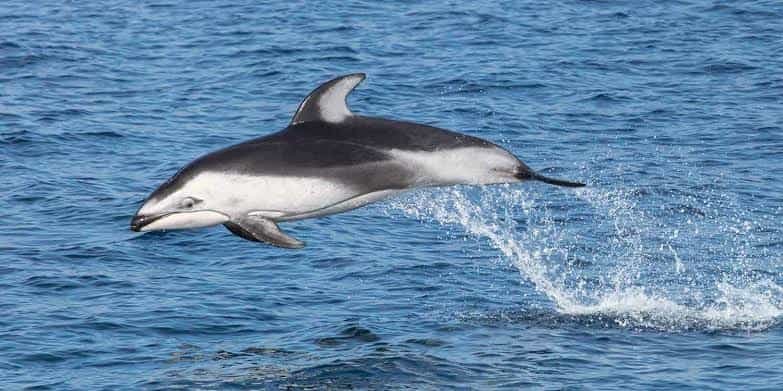
A silver shape breaks the surface, hangs in the sunlight for a heartbeat and disappears into blue water with hardly a sound. Then another dolphin follows, and another, racing beside the boat as if the sea itself has come alive. Dolphins have fascinated people for centuries because they seem to combine qualities we recognise in ourselves—curiosity, cooperation, playfulness and communication—with abilities that belong to an entirely different world. They can find objects in dark water using sound, sleep while keeping half of the brain alert and coordinate their movements in groups with astonishing precision. Some live beside coastlines, some travel through the open ocean and some survive in muddy rivers where eyesight is almost useless. They have appeared in myths, films, aquariums and scientific studies, but the real dolphins are far more interesting than their cheerful public image suggests. Behind every leap and whistle lies a story of evolution, family, intelligence and survival. Here are ten amazing facts that reveal the extraordinary lives of dolphins.
1. Dolphins Are Mammals, Not Fish
A dolphin may spend its entire life in water, but it is a mammal. It breathes air through a blowhole on top of its head, has warm blood, gives birth to live young and feeds its calves with milk. These features separate dolphins from fish, which extract oxygen from water through gills. A dolphin cannot breathe underwater. It must rise to the surface, close the muscles around its blowhole and take a controlled breath. The blowhole is not a mouth or a nose in the ordinary sense; it is an opening connected to the respiratory system. Dolphins also have a special arrangement that keeps the breathing and feeding passages separate, allowing them to swallow prey without filling their lungs with water. A mother usually gives birth to one calf and stays closely involved in its care. The calf swims in a position just behind and beside its mother, where it can nurse and benefit from moving through her slipstream. Every cheerful leap therefore belongs to an animal with the basic biology of a cow, dog or human—not a fish.
2. There Is No Single ‘Dolphin’ Lifestyle
The word dolphin describes a large and varied group of animals rather than one uniform creature. Bottlenose dolphins may live in bays, estuaries, coastal waters and the open ocean. Spinner dolphins rest in sheltered areas and travel to deeper waters to feed at night. Some dolphins are adapted to cold seas, while others live in warm tropical waters. River dolphins represent an even more unusual way of life. The Ganges river dolphin moves through the Ganges, Brahmaputra and related river systems, while the Indus river dolphin survives in the Indus basin. In muddy water, the Ganges river dolphin relies heavily on sound and has extremely poor eyesight. An especially surprising fact is that the orca, commonly called the killer whale, is actually the largest member of the dolphin family. Body shape, teeth, fin structure, hunting technique and habitat can vary greatly, so there is no single blueprint for being a dolphin.
3. Echolocation Gives Dolphins a Sound-Based View of the World
When water becomes dark, deep or cloudy, ordinary eyesight is not enough. Dolphins solve this problem with echolocation. They produce rapid clicks and listen carefully to the echoes that bounce back from fish, rocks, the seafloor and other objects. The returning sound carries information about distance, direction, size and sometimes the shape or texture of the target. A rounded structure on the dolphin’s forehead, called the melon, helps focus the sound beam. The lower jaw and surrounding tissues help receive vibrations returning through the water. Echolocation is not exactly the same as seeing a picture, but it gives the dolphin a detailed acoustic impression of its surroundings. It can locate prey hidden in darkness, search through cloudy water and avoid obstacles. Some dolphins also use passive listening, hearing the movements of prey instead of producing clicks continuously. Their underwater world is therefore built from both sound and silence.
4. Dolphins Sleep with Half of Their Brain Awake
A human can close both eyes and become fully unconscious for several hours. A dolphin cannot safely do that because it must continue rising to the surface to breathe. Instead, dolphins use a remarkable form of rest called unihemispheric sleep. One hemisphere of the brain rests while the other remains active. The awake side helps the animal control breathing, maintain swimming movements and remain aware of possible dangers. The dolphin may keep one eye open while the opposite side of the brain is resting. After a period, the two sides change roles. This arrangement allows dolphins to rest without completely abandoning their surroundings. It also explains why dolphins may appear to swim slowly and quietly while they are resting. Research on trained bottlenose dolphins has shown that they can remain alert and perform echolocation tasks for extended periods while using this unusual sleep pattern. Their sleep is not simply a shorter version of human sleep; it is a completely different solution to the problem of resting in an air-breathing body surrounded by water.
5. Many Dolphins Have Individual ‘Signature Whistles’
Dolphins communicate through clicks, squeaks, whistles, burst-pulsed sounds and body movements such as tail slaps. Among bottlenose dolphins, researchers have identified individually distinctive whistles often called signature whistles. A young dolphin develops its own whistle pattern, and other dolphins may use that sound to identify or contact it. This is why signature whistles are sometimes compared with names. The comparison is useful, but it should be treated carefully. Scientists are still studying exactly how dolphins understand these sounds and how much meaning they carry in different situations. What is clear is that dolphin communication is not limited to random noise. Individuals can recognise one another, maintain contact while spread out and alter their calls during social encounters. A dolphin may even reproduce the signature whistle of another dolphin, apparently to call that individual. The ocean is a difficult place for families and companions to remain together, so sound becomes a powerful social thread connecting animals that cannot always see one another.
6. Dolphins Hunt Together and Pass Knowledge Through Groups
Dolphins are skilled hunters, but their intelligence becomes especially visible when they cooperate. Groups may herd fish into tight formations, take turns rushing through the school or push prey towards a shallow bank where escape is difficult. Bottlenose dolphins have been observed using mud-ring feeding, stirring up a circle of mud that encourages fish to leap out of the water. Different populations can develop different hunting traditions, and young dolphins learn by watching older animals. This suggests that some dolphin behaviour is not only instinctive; it is also social and cultural. A calf does not receive a written manual about where to find fish or how to approach a difficult meal. It follows its mother, observes the group and gradually builds its own skills. The pod therefore works like a living classroom. Experience is carried through relationships, and an efficient feeding method can remain part of a local population’s identity for generations.
7. Some Dolphins Use Tools
One of the most famous examples of animal tool use occurs among bottlenose dolphins in Shark Bay, Australia. Some of these dolphins carry marine sponges over the tips of their beaks while searching for food along the seafloor. The sponge may protect the sensitive beak from sharp objects, shells or rough pieces of coral. This behaviour is not performed by every dolphin in the population. It appears to be concentrated in particular family lines, especially among females and their calves, which has led researchers to study it as a socially learned tradition. A young dolphin must acquire more than a sponge; it must learn how to select one, carry it correctly and use it while foraging. Tool use is often associated with humans, great apes and certain birds, so the dolphin example is a striking reminder that intelligence can evolve in very different environments. In a world without hands, a beak and a piece of sponge can become a practical tool.
8. Dolphins Are Built for Speed, Diving and Constant Movement
The dolphin’s smooth, tapered body is shaped by life in water. Its powerful tail flukes move up and down to produce thrust, unlike a fish’s tail, which usually moves from side to side. The pectoral flippers help with steering and balance, while the dorsal fin helps stabilise the body. Dolphins have no external legs, yet their skeleton still contains tiny internal remnants of hind limbs inherited from distant land-dwelling ancestors. Their bodies also contain adaptations for holding their breath and managing oxygen during dives. Blood and muscle tissues can store oxygen, and circulation can be adjusted so that important organs receive priority during a dive. Different species have different limits: some make short dives near the surface, while others can travel much deeper and remain underwater for many minutes. A dolphin’s speed is not produced by one feature alone. It comes from the combined action of body shape, muscle, skin, tail movement and precise control.
9. Leaping, Spinning and Tail-Slapping May Have Several Meanings
Dolphins are famous for leaping from the sea, spinning through the air and striking the surface with their tails or flippers. These behaviours look playful, but scientists do not assume that every jump has the same meaning. A dolphin may leap to move quickly, remove parasites, communicate with companions, attract attention, escape danger or simply engage in social activity. Spinner dolphins are especially well known for their dramatic aerial rotations. Their leaps may help coordinate a group’s movement or form part of social interaction, although the exact purpose can vary. Tail slaps and body slaps can create strong sounds that travel through water and may warn other dolphins, signal excitement or help organise a hunt. Human observers often interpret these actions as entertainment, but the animals are living complex lives beneath the surface. A leap may be beautiful to watch and useful at the same time.
10. Dolphins Are Important Indicators of Ocean and River Health
Dolphins live near the top of many aquatic food chains, which makes them useful indicators of the health of their environment. When dolphins are exposed to polluted water, falling fish populations, habitat destruction or high levels of underwater noise, scientists can learn about wider problems in the ecosystem. One of the greatest dangers is bycatch, when dolphins become accidentally trapped in fishing nets and drown. Boat strikes, chemical pollution, plastic waste, dams, reduced river flow and disturbance from vessels can also threaten them. River dolphins face especially serious pressure because they share narrow waterways with dense human populations, farms, industries and fishing communities. The Ganges river dolphin is endangered, while several other river-dwelling dolphins have suffered severe population declines. Protection requires more than rescuing individual animals. It means improving fishing practices, keeping rivers clean, protecting habitat and allowing dolphins to feed, rest and communicate without constant disturbance. Their survival is closely connected with the health of the water on which people also depend.
A Life Written in Sound and Water
Dolphins are often introduced as friendly animals that leap beside boats, but that familiar image only touches the surface of their story. They are air-breathing mammals shaped by millions of years of life in water, using sound where humans use sight, sleeping with one side of the brain awake and teaching survival skills through family relationships. Their whistles help maintain social bonds, their hunting methods reveal cooperation and tradition, and their bodies show the extraordinary efficiency of marine evolution. At the same time, dolphins remind us that beauty does not make a species invulnerable. Nets, noise, pollution and damaged rivers can threaten even the most intelligent animals. To understand dolphins fully is to admire their abilities while respecting their limits and protecting the waters they call home. Every leap above the waves is not just a spectacle. It is a brief glimpse into one of the most remarkable lives on Earth.