Few creatures on Earth command the same mixture of awe and fear as the tiger. With its blazing orange coat, jet-black stripes, and eyes that seem to hold centuries of wild memory, the tiger has prowled through human mythology, art, and imagination for millennia. It is a symbol of power in Chinese astrology, a guardian deity in Korean folklore, and the national animal of countries from India to Bangladesh. Yet behind the majestic image lies a creature of astonishing biological complexity — a solitary hunter with near-supernatural senses, a genetic blueprint unlike any other big cat, and a survival story that teeters between triumph and tragedy.
Today, tigers exist only as a fraction of their former population, confined to fragmented forests across Asia after losing more than 90 percent of their historical range. But the story of the tiger is far from just one of decline. It is also a story of extraordinary adaptation, fierce independence, and biological marvels that continue to surprise scientists. Whether you’re a wildlife enthusiast, a conservationist, or simply someone who has always been captivated by these magnificent animals, here are ten fascinating facts about tigers that reveal just how remarkable this apex predator truly is.
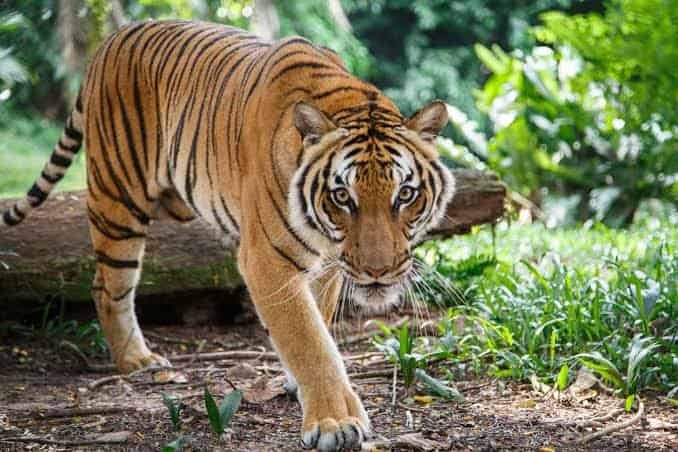
1. No Two Tigers Have the Same Stripes
Just as human fingerprints are unique, every tiger has a distinct stripe pattern that never repeats. These stripes aren’t just painted onto their fur — they extend down to the skin itself, meaning that even if a tiger were shaved, its individual pattern would still be visible. Researchers and conservationists actually use this feature to identify and track individual tigers in the wild through camera-trap photography, eliminating the need for invasive tagging in many cases. The stripe pattern also serves a critical survival function: it breaks up the tiger’s outline in tall grass and dappled forest light, making an already stealthy predator nearly invisible to unsuspecting prey.
2. Tigers Are the Largest Cats on the Planet
While lions often get more attention as the “king of the jungle,” tigers actually hold the title of the largest living cat species in the world. The Siberian (or Amur) tiger, found in the Russian Far East, is the biggest of all tiger subspecies, with males weighing up to 660 pounds (300 kg) and measuring over 10 feet (3 meters) from nose to tail. Even the smallest tiger subspecies, the Sumatran tiger, dwarfs most other wild cats. This immense size allows tigers to take down prey far larger than themselves, including water buffalo and young elephants in rare cases.
3. They’re Excellent Swimmers — Unlike Most Cats
Most felines avoid water at all costs, but tigers break the mold entirely. They are powerful, enthusiastic swimmers and often seek out rivers, lakes, and ponds to cool off during hot weather, especially in tropical regions like the Sundarbans mangrove forests of India and Bangladesh. Tigers have even been recorded swimming distances of several miles, and they’re fully capable of hunting prey in water. Their front paws are lightly webbed, giving them an added advantage when navigating rivers and swamps in pursuit of food or relief from the heat.
4. A Tiger’s Roar Can Be Heard for Miles
The tiger’s roar isn’t just loud — it’s a full-body announcement of dominance that can travel up to 3 kilometers (nearly 2 miles) under the right conditions. This is made possible by a specialized structure in the tiger’s larynx, including an elongated vocal fold that allows for a deep, resonant sound. Tigers use their roar for a variety of purposes: to establish territory, signal their presence to other tigers, locate potential mates, or intimidate rivals. Interestingly, tigers can also make a friendly, non-threatening sound called “chuffing,” produced by blowing air through their nostrils, which is used as a greeting between individuals they trust.
5. Tigers Are Almost Entirely Solitary Animals
Unlike lions, which live in social prides, tigers are fiercely independent and typically live, hunt, and travel alone. Each tiger — particularly males — maintains a large home territory that it marks with scent, claw marks, and vocalizations to warn other tigers to keep their distance. A male tiger’s territory can span anywhere from 20 to over 100 square kilometers, depending on prey availability and habitat quality, and often overlaps with the smaller territories of several females. The only real exceptions to this solitary lifestyle are mothers raising cubs, who may stay together for up to two years before the young tigers strike out on their own.
6. Their Night Vision Is Six Times Better Than Ours
Tigers are primarily nocturnal or crepuscular hunters, meaning they’re most active during twilight and nighttime hours. To support this lifestyle, evolution has gifted them with extraordinary night vision — roughly six times more sensitive than that of a human. This is due to a higher concentration of rod cells in their retinas and a reflective layer called the tapetum lucidum, which bounces light back through the eye to enhance vision in low-light conditions (this is also what causes their eyes to glow when caught in a flashlight or car headlights). Combined with acute hearing and a strong sense of smell, this superior night vision makes tigers formidable ambush predators under the cover of darkness.
7. A Tiger’s Tongue Can Strip Flesh From Bone
Like all big cats, tigers have tongues covered in tiny, backward-facing hooks called papillae, made of keratin — the same protein found in human fingernails. These barbed structures give the tiger’s tongue a texture similar to coarse sandpaper, allowing it to efficiently scrape meat from bones and remove fur from prey before eating. This adaptation is so effective that tigers can consume nearly every edible part of a carcass, wasting very little. Interestingly, this same rough tongue also serves as a built-in grooming tool, helping tigers keep their fur clean and free of parasites.
8. There Are Six Surviving Subspecies of Tiger
Modern tigers are generally classified into six living subspecies: the Bengal, Siberian (Amur), Sumatran, Indochinese, Malayan, and South China tigers — though the South China tiger is considered functionally extinct in the wild, with none confirmed in decades. Three other subspecies — the Bali, Javan, and Caspian tigers — have already gone extinct within the last century, largely due to habitat loss and hunting. Each surviving subspecies has adapted to its specific environment, from the snow-dusted forests of the Russian Far East to the humid rainforests of Sumatra, resulting in noticeable differences in size, coat thickness, and coloration.
9. Tigers Can Eat Up to 88 Pounds of Meat in One Sitting
When a tiger successfully brings down a large prey animal, it doesn’t hold back. A hungry tiger can consume up to 40 kilograms (about 88 pounds) of meat in a single feeding, though they typically eat in smaller amounts over several days if the kill is large enough. Because hunting is energy-intensive and success rates are relatively low — often estimated at just 1 successful hunt for every 10 to 20 attempts — tigers have evolved to gorge when food is available, then go several days without eating while digesting and conserving energy for the next hunt.
10. Fewer Than 5,000 Tigers Remain in the Wild
Perhaps the most sobering fact of all: despite their power and adaptability, wild tiger populations have collapsed dramatically over the past century, dropping from an estimated 100,000 individuals in 1900 to fewer than 5,000 today, according to conservation organizations tracking global populations. Habitat destruction, poaching for traditional medicine markets, and human-wildlife conflict remain the primary threats. However, there is genuine hope — countries like India, Nepal, and Russia have seen tiger populations stabilize or grow in recent years thanks to dedicated conservation programs, protected reserves, and stricter anti-poaching enforcement, proving that a future with wild tigers is still within reach.
Final Thoughts
The tiger is far more than a beautiful predator prowling through popular imagination — it is a finely tuned product of evolution, built for power, stealth, and survival in some of the world’s most demanding ecosystems. From its one-of-a-kind stripes to its startling swimming ability, every aspect of the tiger’s biology tells a story of adaptation and resilience. As habitats shrink and human populations expand, the fate of this magnificent species now rests largely in our hands. Understanding and appreciating facts like these isn’t just fascinating trivia — it’s a reminder of what stands to be lost, and what’s still worth fighting to protect.