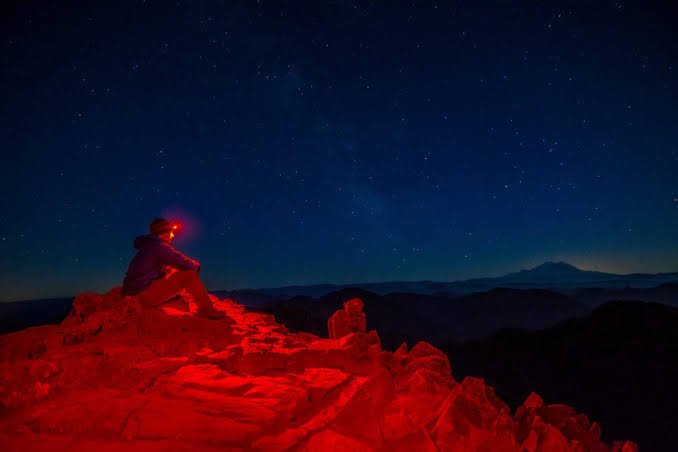
A falling apple, a boiling kettle, a glowing screen and a distant star may seem to belong to completely different worlds. Science connects them. It explains why objects fall, why water changes state, how information passes through cells and how light carries news across the universe. More than a school subject, science is a human effort to replace mystery with understanding—while accepting that every answer can lead to a better question. From the invisible world inside an atom to the enormous structure of the cosmos, these ten facts show why science remains one of humanity’s most powerful ways of exploring reality.
1. Science Is More Than a Collection of Facts
Science is a way of asking questions about the natural world and testing possible answers with evidence. A scientific idea becomes stronger when observations, measurements and experiments support it—and when other researchers can examine or repeat the work. This is why science is different from a guess or an opinion. It is also why scientific knowledge can improve over time. When better evidence appears, scientists revise explanations rather than protecting an old idea simply because it is familiar.
2. Everything Around Us Is Made of Matter
The air, water, soil, food, buildings and our own bodies are made of matter. Matter is built from atoms, which contain a tiny central nucleus surrounded by electrons. Atoms are extraordinarily small, and most of their volume is open space compared with the size of the nucleus. Yet the behaviour of these particles creates the solid objects, liquids and gases we experience every day. By studying atoms, scientists have learned why substances react, conduct electricity, produce colour and change state.
3. DNA Works Like a Biological Instruction System
Deoxyribonucleic acid, or DNA, stores genetic information in living organisms. Its four chemical bases—A, T, C and G—are arranged in sequences that carry biological instructions. The human genome contains roughly three billion base pairs and about 20,000 genes. DNA does not work like a simple destiny machine; genes interact with one another and with the environment. Still, this microscopic molecule helps cells build proteins, maintain the body and pass inherited information from one generation to the next.
4. Looking into Space Means Looking into the Past
Light travels incredibly fast, but space is so large that light still needs time to cross it. Sunlight takes about eight minutes to reach Earth, so we see the Sun as it was eight minutes earlier. Moonlight is about 1.3 seconds old when it reaches our eyes. When telescopes observe galaxies millions or billions of light-years away, they are collecting ancient light. In a real sense, astronomy allows scientists to study the history of the universe by observing what happened long ago.
5. Earth Is Moving in More Than One Way
Earth may feel still beneath our feet, but it is involved in several motions at once. It rotates on its axis roughly every 24 hours, producing the cycle of day and night. It travels around the Sun in about 365.25 days, creating the basis of our year and the need for leap years. The entire solar system also orbits the centre of the Milky Way. NASA estimates that one trip around the galaxy takes about 230 million years. We are travelling through space even while sitting quietly in a chair.
6. Water Has an Unusual Relationship with Temperature
Water behaves differently from many other substances. When liquid water freezes, its molecules form a structure that takes up more space, so ice is less dense than liquid water and floats. This matters enormously in nature. A layer of floating ice can insulate the water below, helping aquatic life survive cold weather. Water also absorbs a great deal of heat before its temperature rises sharply. This helps moderate climates and makes oceans important regulators of Earth’s temperature.
7. Natural Selection Helps Explain the Diversity of Life
Living things vary, and some of those differences can be inherited. When the environment favours a particular trait, organisms carrying that trait may be more likely to survive and reproduce. Over many generations, the trait can become more common in the population. This process is called natural selection. It has no plan or fixed goal, and it does not mean that one species is automatically better than another. It helps explain adaptation, biological diversity and many patterns in the fossil record.
8. Gravity Connects Objects Across Space
Gravity is the attraction between objects that have mass. It keeps our feet on Earth, holds the Moon in orbit and guides planets around the Sun. The Moon’s gravity also contributes to the rise and fall of ocean tides. Gravity becomes weaker with distance, but it acts across enormous stretches of space. The same physical principles that explain a falling apple can also help scientists calculate planetary orbits, predict eclipses and guide spacecraft.
9. Most of the Universe May Be Invisible to Us
The stars, planets, people and everything made from ordinary atoms form only a small part of the universe’s total content. NASA reports that scientists estimate ordinary matter makes up about 5% of the universe, while dark matter may account for about 27% and dark energy about 68%. Dark matter does not shine or reflect light, but its gravitational effects help reveal its presence. Dark energy is an even deeper mystery connected with the universe’s expansion. These ideas remain active areas of research.
10. Science Becomes Stronger When It Corrects Itself
Scientific progress is not a straight line. An experiment may produce an exciting result that later fails to appear when other researchers repeat it. A measurement may reveal an error, or a new instrument may expose details that were previously invisible. Rechecking, replication, criticism and open debate help science correct mistakes. Changing an explanation in response to better evidence is not a weakness. It is one of the reasons science can gradually become more reliable than personal belief or first impressions.
Curiosity Is Where Discovery Begins
Science does not make the world less wonderful. It reveals how much more there is to discover. Every experiment, observation and carefully tested idea adds another piece to our picture of nature. The most valuable scientific habit is curiosity guided by evidence: ask boldly, check carefully and remain willing to learn something new.