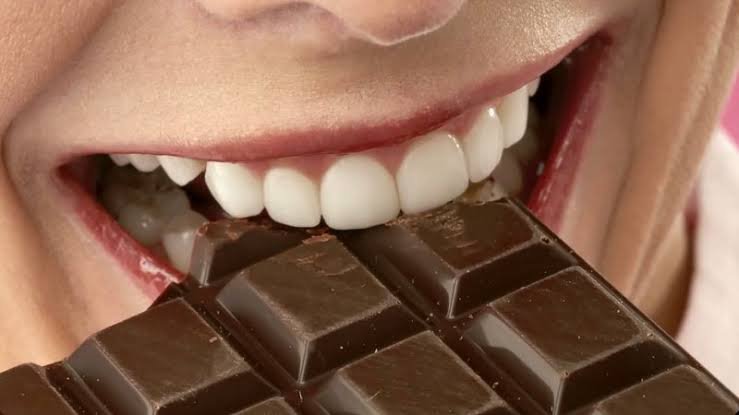
Break a chocolate bar and listen for that clean little snap. It feels like a simple pleasure, but inside that sound is a remarkable story: a tropical fruit, seeds transformed by fermentation, centuries of trade, careful chemistry and the patience of farmers and makers. Chocolate has travelled from ancient ceremonial drinks to European kitchens, modern laboratories, birthday cakes and the square quietly unwrapped at the end of a long day. Its flavour can be fruity, floral, nutty, smoky or intensely bitter, even though it begins with a bean that tastes nothing like a finished confection. The facts below follow chocolate from the cacao tree to the finished bar, exploring its history, manufacture, varieties, science, health questions and one important warning for pet owners.
1. Chocolate Begins Inside a Strange Tropical Fruit
Chocolate does not begin as a sweet brown slab. It starts inside the pod of the cacao tree, Theobroma cacao. The tree produces ridged, oval pods that grow directly from its trunk and older branches, a pattern called cauliflory. When a ripe pod is opened, it reveals a cluster of seeds surrounded by sticky white pulp. Those seeds are the future cocoa beans. Fresh cacao pulp can be pleasantly sweet and fruity, but the seeds themselves are bitter and astringent. They need fermentation, drying and roasting before the familiar chocolate flavour emerges. The words cacao and cocoa are often used differently by farmers, manufacturers and food writers, but the distinction is not perfectly consistent. In everyday use, cacao usually points to the tree or less-processed ingredients, while cocoa often refers to processed beans or powder.
2. Its Story Began Thousands of Years Ago
Chocolate has a much older history than the modern candy bar. Archaeological and genetic research points to the upper Amazon and other parts of tropical South America as an early home of cacao, after which the plant and its uses spread northward. By the time European chroniclers encountered Mesoamerican societies, cacao already had an important cultural life. Maya and later Aztec communities prepared drinks from ground cacao, water and other ingredients, and cacao could be connected with ceremony, status, trade and currency. The scientific name Theobroma cacao is commonly translated as ‘food of the gods’, an apt name for a plant that has carried both sacred and social meaning. Its history is therefore not simply the story of a sweet: it is also a story of agriculture, ritual, exchange and cultural contact.
3. Fermentation Creates the Taste We Recognise as Chocolate
One of the most important stages in chocolate making happens before the beans reach a factory. After ripe pods are harvested and opened, the seeds and their white pulp are placed in heaps, boxes or other containers to ferment. Microorganisms break down the pulp and generate heat, acids and flavour precursors inside the beans. This process changes the raw seeds dramatically. After fermentation, the beans are dried, reducing their moisture to a level suitable for storage and transport. At the factory, roasting develops the characteristic aromas of chocolate. The beans are then cracked and winnowed to remove the shells, leaving pieces called nibs. Grinding turns the nibs into a thick cocoa mass, sometimes called chocolate liquor even though it contains no alcohol. Without careful fermentation, even excellent cacao can produce flat, harsh or unbalanced chocolate.
4. Chocolate Was First a Bitter, Spiced Drink
For much of its early history, chocolate was consumed as a beverage rather than a bar. In Mesoamerica, cacao drinks could be mixed with water, spices, flowers, maize or chilli, depending on the community and occasion. They were often poured from one vessel to another to create a layer of foam. The drink was not necessarily sweet, and its bitterness was part of its identity. When cacao reached Europe, cooks and confectioners gradually combined it with cane sugar, honey, milk and new preparation methods. The taste became more familiar to modern consumers, but the transformation also changed who could enjoy it and how it was served. Chocolate moved from ritual and elite contexts into cafés, households and eventually mass-produced confectionery. The solid bar developed only after improvements in pressing, grinding, mixing and temperature control made a smoother product possible.
5. One Cacao Bean Can Become Several Different Ingredients
After the nibs are ground, the resulting cocoa mass contains both cocoa solids and cocoa butter. Manufacturers can press this mass to separate much of the fat from the remaining solids. The cocoa butter may be used to create the smooth texture of chocolate, while the pressed solids can be milled into cocoa powder for baking, drinks and desserts. Chocolate itself is made by combining cocoa ingredients with sugar and, depending on the recipe, extra cocoa butter, milk solids, vanilla or other flavourings. White chocolate is a useful example of how labels can confuse people: it generally contains cocoa butter but no cocoa solids, which means it has a pale colour and a creamy flavour. It belongs to the chocolate family by its formulation, even though it does not deliver the deep cocoa taste of dark chocolate.
6. Dark, Milk and White Chocolate Are Different Recipes
The familiar categories of dark, milk and white chocolate reflect different balances of cocoa ingredients, sugar and dairy. Dark chocolate generally contains more cocoa solids and little or no milk, producing a stronger, more bitter flavour. Milk chocolate adds milk powder or other milk ingredients, creating a softer taste and lighter colour. White chocolate is built mainly from cocoa butter, sugar and milk ingredients. The cocoa percentage on a label tells you how much of the product comes from cocoa ingredients, but it does not by itself tell you whether a bar is better, healthier or more delicious. Origin, fermentation, roasting, particle size, sugar level and recipe all matter. A high-percentage bar may taste intensely bitter, while a lower-percentage bar may be more balanced for a particular palate. Quality is a combination of ingredients, technique and taste—not one number.
7. Tempering Gives Chocolate Its Shine and Snap
A polished chocolate bar is the result of controlled crystal formation. Cocoa butter can solidify into several different crystal structures, but confectioners want the form that gives chocolate a glossy surface, firm texture and clean snap. To achieve it, chocolate is melted, cooled and gently warmed again within carefully controlled temperature ranges. This process is called tempering. Chocolate that has not been tempered properly may look dull, feel soft or melt unevenly, although it can still be perfectly edible. Another important step is conching, in which chocolate is mixed and worked for an extended period. Conching helps distribute cocoa butter, reduce unwanted harshness and develop a smoother mouthfeel. The sensation of chocolate melting quickly on the tongue is therefore partly agricultural and partly an example of food engineering.
8. Chocolate’s Health Story Is Interesting but Not a Free Pass
Cocoa contains plant compounds called flavanols, and researchers have studied whether these compounds influence blood-vessel function and circulation. Some controlled studies and reviews suggest that cocoa flavanols may produce modest, short-term improvements in measures such as flow-mediated dilation or blood pressure. However, the evidence is not a promise that ordinary chocolate prevents heart disease, cures illness or makes an unhealthy diet healthy. Processing can reduce flavanol levels, and many chocolate products also contain substantial sugar, fat and calories. A dark chocolate bar may contain more cocoa than a milk chocolate bar, but it is still an energy-dense food. The sensible conclusion is measured: chocolate can be enjoyed as part of an overall balanced diet, while portion size and the nutrition label matter. Potential benefits should never be used to justify unlimited eating or replace medical advice.
9. A White or Gray Coating May Be Bloom, Not Spoilage
Have you ever opened chocolate and found a pale, dusty coating on the surface? It may be bloom. Fat bloom occurs when cocoa butter or other fats move through the chocolate and recrystallise, often after temperature changes. Sugar bloom happens when moisture dissolves sugar on the surface and the sugar later recrystallises into rough crystals. Both types can make chocolate look old and give it a less pleasant texture, but they do not automatically mean the product is dangerous. If chocolate has an unusual smell, visible mould or signs of contamination, it should be discarded. Otherwise, bloomed chocolate can often still be used in baking or melted recipes. To protect its texture, store chocolate in a cool, dry, stable place away from strong odours. Repeatedly moving it between a warm room and a cold refrigerator is an invitation to bloom.
10. Chocolate Is Safe for People but Dangerous for Many Pets
Chocolate contains natural methylxanthines, especially theobromine and caffeine. Humans generally process the quantities found in normal servings without difficulty, although sensitivity to caffeine varies and large amounts are not harmless. Dogs, however, metabolise theobromine much more slowly, and chocolate ingestion can lead to vomiting, restlessness, rapid heartbeat, tremors, seizures and potentially life-threatening poisoning. The risk depends on the animal’s size and the type and amount of chocolate: cocoa powder and dark or baking chocolate are more concentrated than milk chocolate, while white chocolate contains very little theobromine. Pet owners should never wait to guess whether an exposure is serious. If a dog or another animal eats chocolate, contacting a veterinarian or an animal poison service promptly is the safest response. This is one reason chocolate should be stored where curious pets cannot reach it.
More Than a Sweet Treat
Chocolate is memorable because it joins opposites. It can be bitter and sweet, ancient and modern, rustic at the farm and highly engineered in the factory. A single square carries the character of a tropical bean, the invisible work of fermentation, the decisions of a maker and the expectations of the person tasting it. Understanding that journey makes chocolate even more enjoyable: we can appreciate the craft, read labels with greater confidence, keep health claims in perspective and remember that responsible choices matter along the supply chain. The next time a chocolate bar melts on your tongue, it is worth remembering that the pleasure began inside a strange fruit, in a warm forest, long before it reached the wrapper.