Flip a switch and a room comes alive. A bulb glows, a fan turns, a phone begins charging and an invisible network of machines starts working around us. Electricity feels ordinary because modern life depends on it every minute, yet its behaviour is surprisingly fascinating. It can appear as a tiny spark, travel through metal wires, move across power grids and even form a gigantic flash of lightning. Electricity is not created from nothing; it is produced by converting other forms of energy and then carried to the places where people need it. The following facts explain the science behind current, voltage, circuits, magnets, batteries, static charge and the electrical systems that shape the modern world.
1. Electricity Is the Movement of Electric Charge
Electricity is associated with electric charge. In most metal wires, the moving charges are electrons. When a difference in electrical potential pushes these charges through a conductor, an electric current is produced. Electricity may be static, when charge builds up in one place, or current electricity, when charge moves through a path. This simple idea powers devices ranging from tiny sensors to enormous industrial machines.
2. Electricity Is a Secondary Energy Source
The electricity used in homes is usually made by converting primary energy into electrical energy. Coal, natural gas, nuclear fuel, sunlight, wind and flowing water can all be used in different generation systems. Electricity is therefore an energy carrier. It can later be converted into light, heat, sound, motion or information. This is why one electrical supply can operate so many different kinds of appliances.
3. Most Generators Use Magnetism
Many generators work because of electromagnetic induction. In 1831, Michael Faraday showed that moving a magnet near a coil of wire can induce an electric current. Modern generators use this relationship between motion, magnets and coils. A turbine may be turned by steam, wind or water, while the generator converts that mechanical motion into electrical output. The original energy source changes, but the generator’s basic principle remains similar.
4. A Circuit Must Be Complete for Current to Flow
Electric current needs a continuous conducting path. In a simple circuit, a battery provides electrical potential, wires provide a route and a bulb or motor uses the energy. Opening a switch breaks the path and stops the current. Closing it completes the circuit. This is why a switch does not create electricity; it controls whether an existing electrical path is open or closed.
5. Voltage, Current and Resistance Are Different
Voltage is the electrical potential difference that pushes charge. Current is the rate at which charge flows, and resistance is the opposition to that flow. These quantities are connected by Ohm’s law: voltage equals current multiplied by resistance. A higher voltage can push more current through the same resistance, while greater resistance makes current more difficult to pass. Understanding this relationship is central to circuit design.
6. Batteries Use Chemistry to Produce Electricity
A battery does not store a little bottle of electricity. It stores chemical energy. Chemical reactions inside the battery create a difference in charge between its terminals. When a conducting circuit connects the terminals, electrons move through the external path and the device receives energy. Rechargeable batteries reverse many of these chemical changes when connected to an appropriate power source.
7. Transformers Help Electricity Travel Long Distances
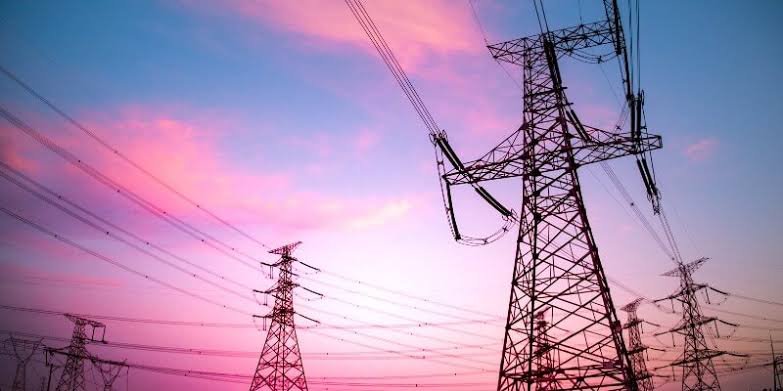
Electricity is transmitted over long distances at high voltage because higher voltage allows the same power to travel with lower current and reduced energy loss in wires. Transformers change voltage levels without changing the frequency of alternating current. A transformer can step voltage up for transmission and step it down again before electricity enters homes, schools and businesses.
8. Static Electricity Can Create Lightning
Static electricity occurs when electric charge collects on an object instead of flowing continuously. Rubbing two different materials can move electrons from one surface to another, producing attraction or a small spark. In storm clouds, collisions among water droplets and ice particles help separate charge. When the electrical difference becomes large enough, a discharge can occur as lightning.
9. Electricity and Magnetism Are Closely Connected
Electric current creates a magnetic field around a conductor. Moving magnets can also produce electric current. This connection makes electric motors, generators, speakers, microphones and many medical devices possible. In a motor, electrical energy creates magnetic forces that produce motion. In a generator, motion and magnetism are used to produce electrical energy. Electricity and magnetism are two parts of one larger field of physics.
10. Electricity Can Be Useful and Dangerous
Electricity improves life, but it must be handled carefully. A current passing through the human body can interfere with nerves, muscles and the heart. Water can increase danger because it helps electricity find unwanted paths. Damaged wires, overloaded sockets and unsafe repairs can cause shock or fire. Proper insulation, circuit protection, earthing and qualified electrical work reduce these risks.
The Power Behind Modern Life
Electricity is invisible, but its effects are everywhere. It lights homes, carries information, drives transport, supports hospitals and allows modern communication to function. Behind every switch is a chain of scientific ideas involving charge, energy, motion, magnetism and carefully designed circuits. Learning how electricity behaves makes everyday technology less mysterious and encourages safer habits. It also reminds us that the power we use has an environmental cost depending on how it is generated. The future of electricity will depend on efficiency, storage, renewable sources and responsible use.