Every trading day, one number begins telling a story about India’s financial mood. It flashes across television screens and mobile apps, becoming headline news when it rises sharply or falls suddenly. That number is the Sensex. To some people, it is simply a market figure; to others, it represents confidence, fear, growth and the changing value of Indian businesses. But the Sensex is more than a line on a chart. It has a long history, a carefully designed calculation method and a changing group of companies meant to represent important parts of the economy. Its movements can reflect corporate earnings, interest rates, elections, global events, foreign investment and investor expectations. At the same time, it does not represent every listed company or guarantee that every investor will make money. Here are ten facts explaining how India’s best-known stock-market index was created, how it works and why it still matters.
1. Sensex Is the Benchmark Index of the BSE
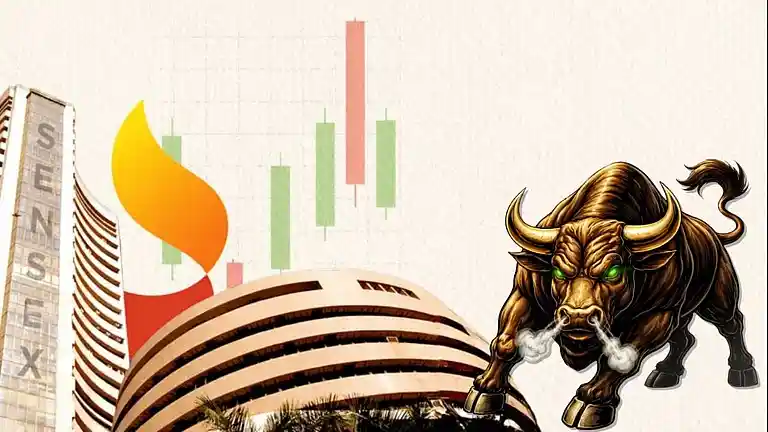
The Sensex is the benchmark equity index associated with the Bombay Stock Exchange, now officially known as BSE Ltd. It is designed to measure the performance of 30 large, liquid and financially sound companies listed on the exchange. Because these companies operate across major areas of the economy, the index is widely used as a quick indicator of the direction of large-cap Indian equities. When the Sensex rises, it generally means the combined market value of its constituents has increased. When it falls, the opposite is usually true. It is a market indicator, not a company, security or bank account.
2. The Index Was Officially Launched in 1986
The BSE SENSEX was launched on 2 January 1986, but its historical calculation reaches back to a base period of 1978–79. This long history gives investors a record of how Indian large-company shares behaved through liberalisation, technology expansion, banking changes, global crises, reforms and rising household participation. The companies in the index have changed repeatedly as industries and business leaders changed. The Sensex is therefore not a frozen list from the 1980s; it is reviewed to remain relevant.
3. The Name Sensex Comes from ‘Sensitive Index’
The word Sensex is commonly understood as a blend of “sensitive” and “index.” It grew out of the earlier phrase BSE Sensitive Index, which described an index responding to share-price movements. The short name became popular among market professionals, newspapers and investors. Its name also captures the nature of an equity index: it is sensitive to changing expectations. Inflation, a central-bank decision, a war, a budget announcement or a company result can quickly influence the buying and selling that moves the index.
4. Its Base Value Was 100
The Sensex began with a base value of 100 for the 1978–79 base period. This does not mean that the 30 companies were worth only 100 rupees, nor does the current index level represent rupees in a bank account. An index number is a measurement scale. It shows how the selected group has changed relative to its starting point, after adjustments for corporate actions and index changes. A rise from 100 to a much higher figure indicates long-term growth in the index’s measured value, but it is not the return earned by every investor.
5. The Sensex Uses Free-Float Market Capitalisation
The Sensex is calculated using free-float market capitalisation. Market capitalisation is the share price multiplied by the number of shares issued. Free float refers broadly to the portion of shares that is available for ordinary public trading, rather than shares held by promoters, controlling shareholders, governments or other holders whose stakes may not be freely traded. This method gives greater influence to large companies with a larger publicly available share base. It also means that the index is not calculated by simply adding the share prices of its 30 stocks and dividing by 30. The method is designed to reflect investable market value more realistically.
6. The Thirty Companies Do Not Have Equal Weight
A common misunderstanding is that each Sensex company contributes exactly the same amount to the index. In reality, constituents have different weights based mainly on their free-float market capitalisation. A very large company can therefore influence the index more than a smaller constituent. If several heavily weighted stocks rise, the Sensex may advance even when some smaller constituents fall. The reverse can also happen. Investors who want to understand a daily move should look beyond the headline number and check which companies contributed most to the change. The index level is a combined result, not a simple vote among 30 stocks.
7. Its Constituents Represent Major Economic Sectors
The Sensex is intended to include companies from important sectors rather than one industry. Its constituents may include businesses connected with banking, information technology, energy, automobiles, consumer products, telecommunications, healthcare and industrials. The exact list is not permanent. Companies can enter or leave when their size, liquidity, trading record or broader representation changes. Sector diversity gives the index a wider view than a single-sector index, although it can never capture the full variety of India’s listed market.
8. The Index Is Reviewed and Its Members Can Change
Index membership is not a lifetime award. BSE Index Services reviews the index under published rules so that it continues to represent large and actively traded companies. Changes may follow scheduled reviews, corporate events, mergers, demergers, major rank changes or other eligibility developments. A replacement can attract attention because index-tracking funds and other portfolios may adjust their holdings. A company leaving the Sensex is not automatically a bad company, just as entering is not a guarantee of future success.
9. Sensex and Nifty 50 Are Different Indexes
The Sensex and the Nifty 50 are often mentioned together, but they are not the same index. Sensex tracks 30 companies associated with the BSE, while the Nifty 50 tracks 50 companies associated with the National Stock Exchange. Both are broad market benchmarks, use market-capitalisation-based approaches and are watched closely by investors. Their daily movements may look similar because both respond to large economic and global developments, yet their constituents, weights, calculation systems and exchange environments differ. Comparing them can help investors understand the market, but one should not treat one as a perfect substitute for the other.
10. Sensex Is a Barometer, Not a Complete Investment Plan
The Sensex is useful for judging the direction of large Indian companies, but it does not represent every stock, sector or investor’s experience. Mid-cap and small-cap shares may behave very differently. Even when the Sensex rises, an individual portfolio may fall if it owns different companies. The index can also decline sharply during economic uncertainty, global selling, high interest rates or weak corporate expectations. Investors can gain exposure through index funds or exchange-traded funds, but they still face market risk, tracking differences, costs and taxation. An index is a tool, not a promise of profit.
Why the Sensex Still Matters
The Sensex has survived and recorded several generations of change because it gives a complicated market a simple public reference point. Its 30 constituents, free-float calculation, long historical record and periodic reviews allow it to act as a practical window into large Indian businesses. Yet its simplicity can also mislead when people treat it as a complete picture of the economy or a guarantee of personal returns. The right way to read the Sensex is as a useful signal: it reflects the combined expectations placed on a selected group of leading companies at a particular moment. Understanding what lies behind the number makes market headlines easier to interpret and encourages more thoughtful financial decisions.